
Drainage & Stormwater
Downspout & Underground Drain Lines Myrtle Beach
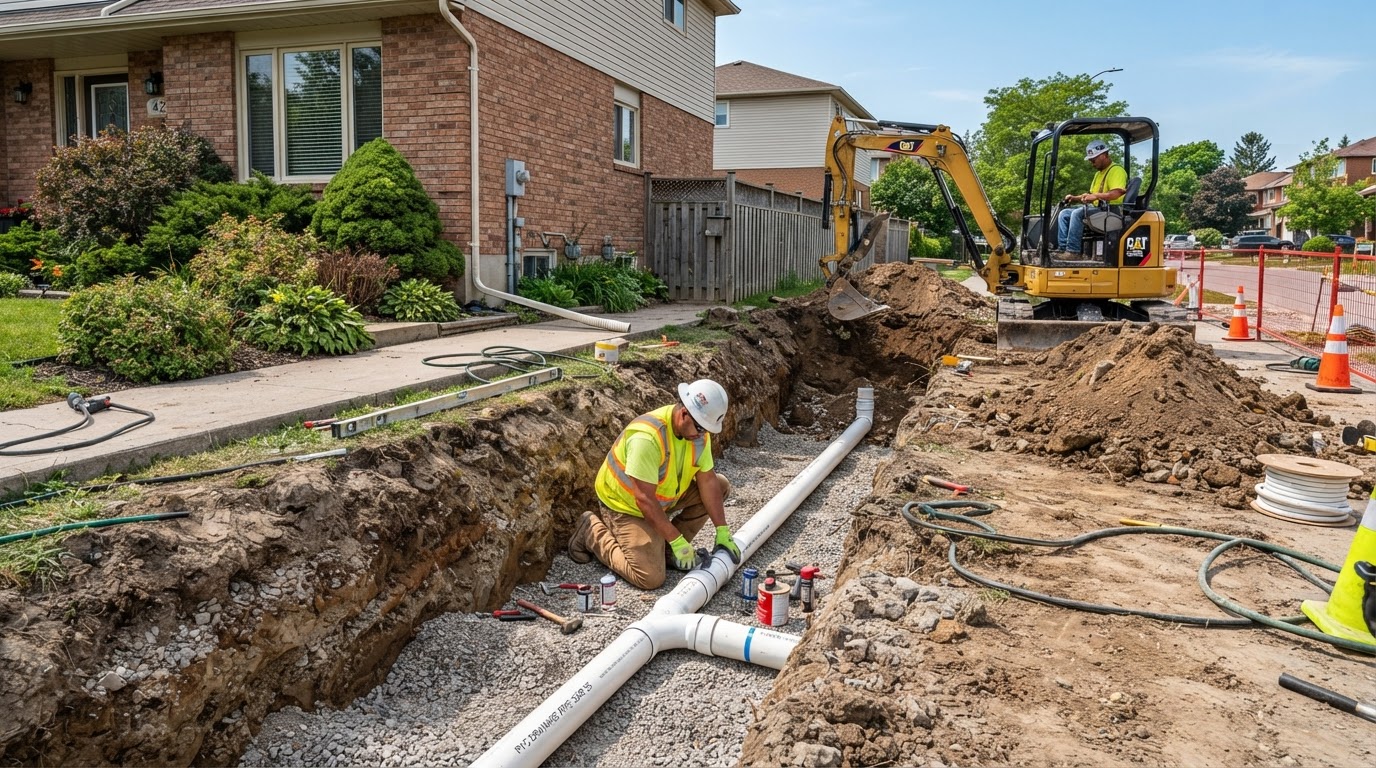
Roof runoff from gutter downspouts can saturate the ground around a foundation, create standing water in low yard areas, and overwhelm nearby drainage paths. Underground downspout drain lines collect that roof water and convey it through buried pipe to an approved discharge point away from the structure. We help Myrtle Beach property owners plan buried drain line routes, evaluate suitable outlets, and coordinate the installation with surrounding grading and drainage work. Share your property details and we will discuss the drainage scope that applies to your site.
Underground Downspout Drainage in Myrtle Beach
Underground downspout drain lines are a targeted drainage solution for managing roof runoff. They differ from French drains, which collect subsurface water, and from general yard drainage, which addresses surface accumulation. Understanding how buried drain lines fit within a property’s overall drainage plan helps clarify when they are the right approach.
Buried Downspout Extensions
A buried downspout extension connects the base of a gutter downspout to an underground pipe that carries roof water away from the foundation. The pipe follows a planned route to a discharge point — a pop-up emitter, daylight outlet, ditch, or approved storm connection. Proper slope, pipe sizing, and outlet elevation determine whether the system flows reliably or backs up during heavy rain. Not every downspout needs a buried line; the decision depends on where water currently discharges and whether that area can handle the volume.
Underground Drain Lines near Myrtle Beach
Buried drain lines can convey roof runoff, surface collection from catch basins, or other appropriately captured water along a planned underground route. The pipe alignment must avoid existing utilities, maintain adequate slope, and terminate at a discharge location that can accept the flow. On properties with limited elevation drop or a high water table, the available outlet may constrain what is practical. Site access for trenching equipment and surface restoration over the trench are also planning factors.
Roof Runoff and Yard Drainage Coordination
Roof runoff, surface grading, catch basins, and other drainage infrastructure interact on every property. A downspout that discharges onto a flat or poorly-draining area can create persistent saturation that surface grading alone may not resolve. Coordinating buried drain lines with yard grading, swales, or collection systems addresses the full drainage picture rather than treating roof water in isolation. Not every downspout should connect to a buried pipe or a public drainage system — the right approach depends on site conditions and allowable discharge.
Planning Underground Drain Lines near Myrtle Beach
Planning a buried downspout drain line involves evaluating the property’s existing conditions, identifying a suitable discharge route, and coordinating the installation with surrounding drainage and utility infrastructure.
Pipe Routing and Existing Utilities
The pipe route is shaped by downspout locations, existing grades, underground utilities, trench access, and the location of structures. Before any excavation, existing underground infrastructure should be identified to avoid conflicts with water, sewer, gas, electrical, or communication lines. The trench must be deep enough to protect the pipe and maintain slope, wide enough for installation, and routed to minimize disruption to landscaping and hardscapes. Surface restoration over the trench — whether lawn, mulch, or pavement — is part of the project scope.
Evaluating Appropriate Drainage Outlets
A buried drain line only works if the discharge point sits lower than the inlet and can accept the water volume. Outlet elevation, capacity, and existing drainage patterns all matter. Discharging onto a neighboring property, into a roadside ditch, or into a public storm system may require authorization from the controlling authority. A suitable outlet might be a pop-up emitter in a lawn area, a daylight discharge to a swale, or a connection to an approved drainage feature. The outlet must be evaluated before the pipe route and installation details are finalized.
Downspout Drainage Considerations in Myrtle Beach
Several variables influence the scope and performance of an underground downspout drain line project. Understanding these factors helps you provide useful information when requesting an estimate.
Factors That Influence Installation Scope
- Roof drainage volume — contributing roof area and downspout count
- Surface elevations — available slope from inlet to outlet
- Pipe alignment — length, depth, and routing constraints
- Soil conditions — trench stability and backfill suitability
- Groundwater — seasonal water table influences on trenching
- Existing utilities — underground lines that may conflict
- Outlet restrictions — discharge capacity and authorization
- Maintenance access — cleanouts and inspection points
- Blockage risks — debris, sediment, and root intrusion potential
- Surface restoration — lawn, mulch, or hardscape over the trench
We do not prescribe universal pipe diameters, slopes, or outlet arrangements. The appropriate specifications depend on the property’s conditions, the volume of roof water being managed, and the available discharge route. Each project is evaluated based on its actual site conditions.
Underground Drain Line FAQs near Myrtle Beach
Discuss Underground Drainage Installation in Myrtle Beach
Share the property location, downspout positions, where roof water currently discharges, and any existing drainage features or known utility lines. The more complete the picture, the more productive the discussion about buried drain line routing, suitable outlets, and next steps.