
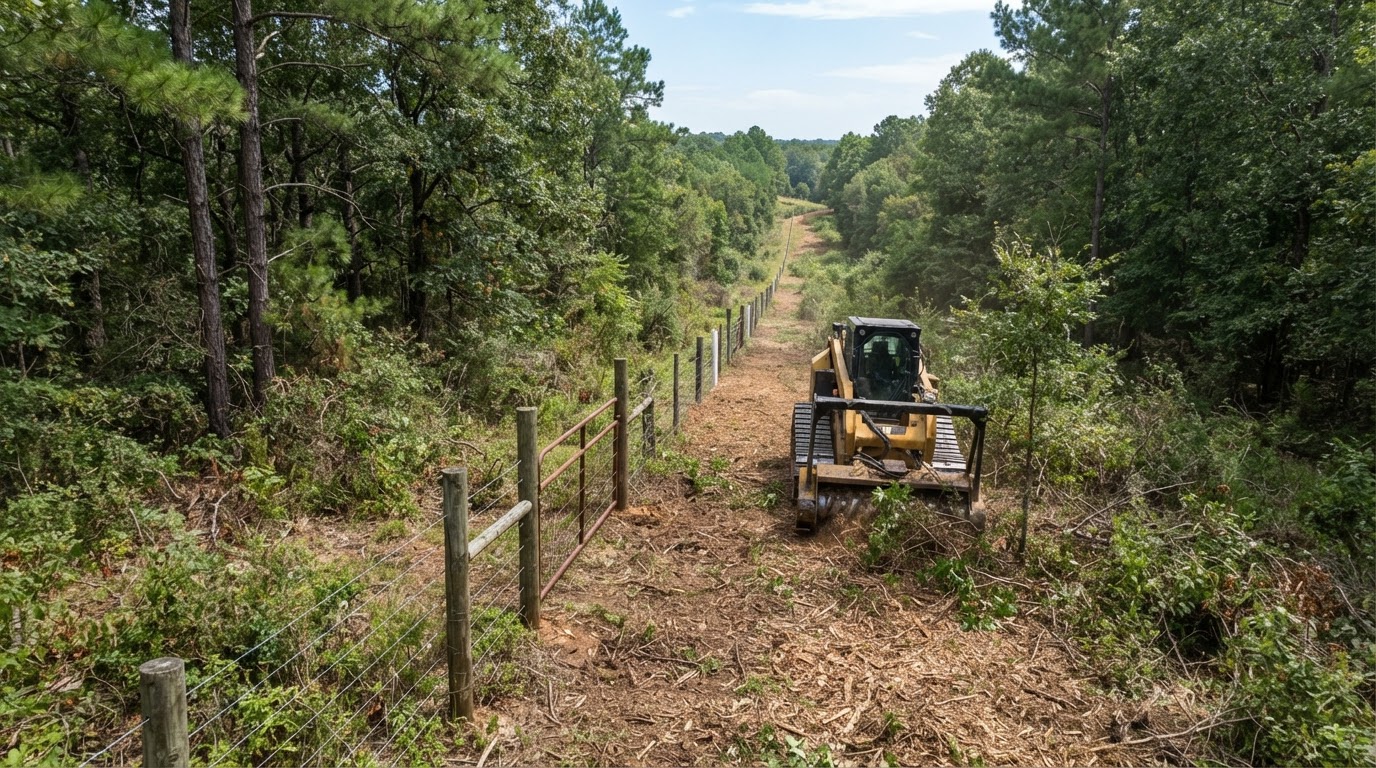
Right-of-Way & Fence Line Clearing
Right-of-Way & Fence Line Clearing Myrtle Beach
Right-of-way and fence line clearing is the authorized removal of vegetation along a designated corridor — a property boundary, a fence alignment, a utility easement, or an access path. The clearing is limited to the authorized width and length, and the work must respect the property boundaries, the easement terms, and any applicable utility or regulatory requirements. Not all rights-of-way are publicly available for private clearing. The scope depends on the property ownership, the corridor dimensions, the vegetation density, the equipment access, and the authorized clearing limits. Share your property details and we will discuss the corridor clearing scope that fits your site.
Right-of-Way & Fence Line Clearing near Myrtle Beach
Corridor clearing serves different purposes depending on the property and the corridor’s function. Understanding the purpose helps define the clearing width, the vegetation removal scope, and the coordination required.
Fence Line Vegetation Removal
Clearing vegetation along a fence line removes brush, small trees, and overgrowth that has encroached on the fence or the property boundary. The clearing improves access, reduces vegetation pressure on the fence, and creates a defined corridor along the property line. The clearing width depends on the fence alignment, the property owner’s objectives, and any retained vegetation outside the immediate work area. The property boundaries must be identified so the clearing stays within the authorized limits. Cut vegetation is chipped, hauled, or managed onsite depending on the material and the property’s needs.
Access and Utility Corridor Clearing in Myrtle Beach
Access and utility corridors may require clearing to create a passable route or to maintain visibility and access along an easement. The clearing width depends on the corridor’s purpose — an access path may need a narrower clearing than a utility easement that requires equipment access. Existing utilities within the corridor must be identified before clearing proceeds. The easement terms and the utility provider’s requirements may dictate what vegetation can be removed and what must be retained. We do not assume that utility easements automatically grant unrestricted clearing rights to the property owner.
Rural Boundary and Property Maintenance
Rural properties may accumulate vegetation along boundaries and fence lines over time. Clearing that growth maintains the property line, improves access for maintenance, and reduces the risk of encroaching vegetation. The clearing is selective — removing the unwanted growth while retaining designated trees or buffer areas outside the work corridor. The property boundaries, the existing fences, and the adjacent improvements all influence the clearing scope. The equipment access along the corridor and the material handling for cut vegetation are part of the project.
Planning Corridor Clearing in Myrtle Beach
A productive corridor clearing discussion starts with understanding the property, the corridor’s purpose, and the authorized limits. These are the planning considerations that help define the scope.
Property Ownership, Easements and Authorization
The property ownership, any easements that cross the property, the work authorization, and the available survey information all define the clearing limits. The clearing width from the approved plans or the property owner’s objectives defines the corridor’s breadth. Existing utilities within the corridor must be identified before clearing proceeds. Retained trees and vegetation outside the clearing limits should be preserved. Adjacent improvements — fences, structures, landscaping — may need protection during the work. The authorization to clear depends on the property ownership, the easement terms, and any applicable regulatory requirements.
Vegetation, Equipment Access and Material Handling
The vegetation density, the corridor length, the terrain, and the equipment access all influence the clearing scope. Dense brush and small trees may require mechanical clearing equipment, while lighter growth may be handled with smaller equipment. The equipment must be able to reach the corridor, which depends on the access from the road and the terrain along the route. Cut vegetation is chipped, hauled, or managed onsite. Existing fences, utility conflicts, and adjacent properties may constrain the work. The clearing limits should be established and respected throughout the project.
Fence Line Clearing Considerations near Myrtle Beach
The variables that influence a corridor clearing project differ by site. Understanding these factors helps you provide useful information when requesting an estimate.
Density, Length, Terrain and Access
- Vegetation density — brush, small trees, and overgrowth
- Corridor length — the linear distance to be cleared
- Terrain — slopes, drainage, and ground conditions
- Equipment access — entry conditions and route along the corridor
- Existing fences — condition and proximity to the clearing
- Utility conflicts — overhead and underground lines within the corridor
- Property boundaries — survey information and clearing limits
- Disposal requirements — chipping, hauling, or onsite management
We do not imply that utility easements automatically grant unrestricted vegetation-clearing rights to the property owner. The easement terms, the utility provider’s requirements, and the applicable regulations determine what clearing is authorized. Each project is evaluated based on its actual conditions and the authorized clearing limits.
Right-of-Way Clearing FAQs in Myrtle Beach
Discuss Right-of-Way Clearing near Myrtle Beach
Share your property location, the corridor's purpose, the authorized clearing limits, the vegetation conditions, the equipment access, and any easement or utility information. The more complete the picture, the more productive the discussion about clearing scope, boundaries, and next steps.