
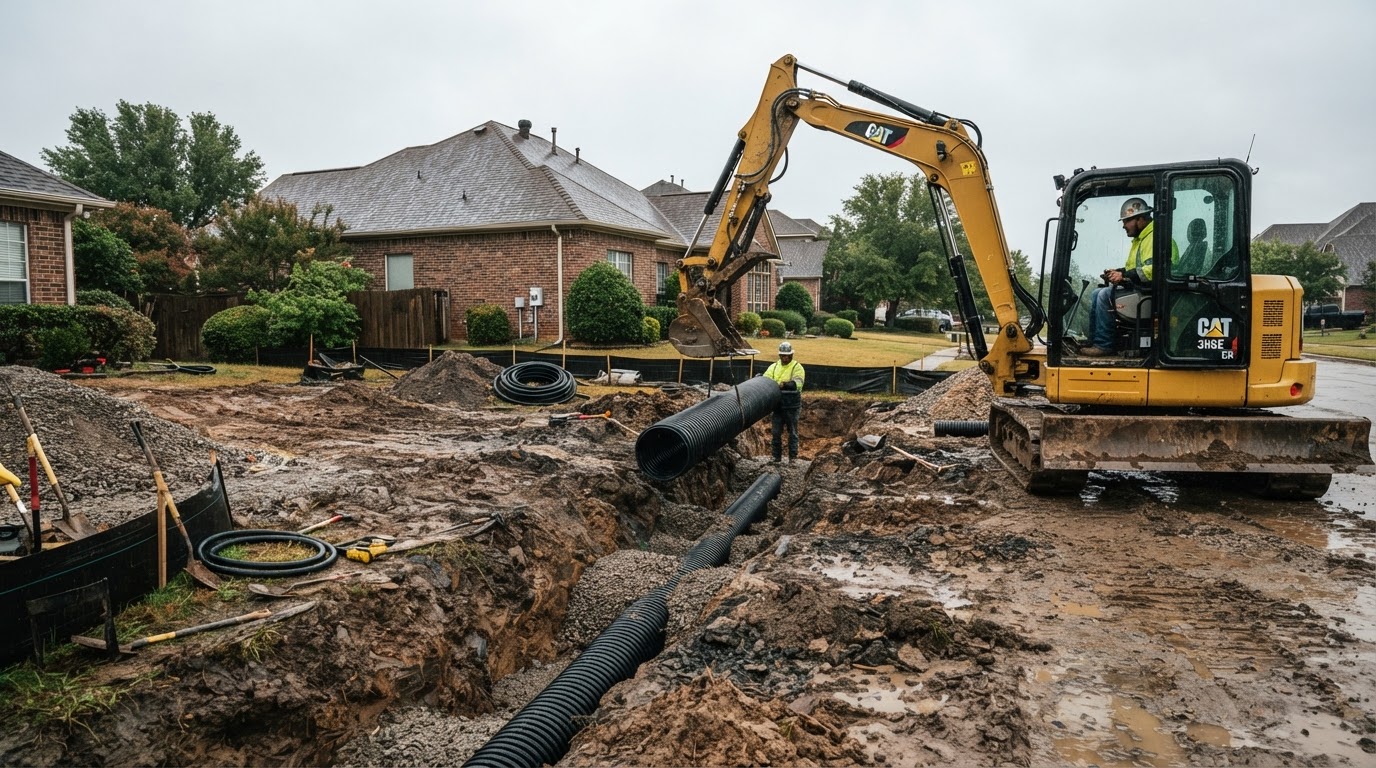
Drainage & Stormwater
Drainage Solutions Myrtle Beach
Drainage problems on a Myrtle Beach property can take many forms — standing water after rain, saturated yard areas, runoff pooling near a foundation, or an existing drainage system that no longer keeps up. The right drainage solution depends on identifying where the water comes from, how it moves across the site, and where it can be discharged within an approved route. We help property owners and project decision-makers evaluate drainage conditions and define a project-specific approach. Share your property details and we will discuss the drainage scope that applies to your site.
Property Drainage Solutions in Myrtle Beach
Drainage solutions are not a single product applied to every property. The appropriate approach depends on whether the problem is surface runoff, subsurface groundwater, concentrated roof water, or a combination — and whether the site has a suitable discharge outlet. Understanding the range of drainage options helps clarify which approach may fit your property.
Residential Yard Drainage Problems
Common residential drainage concerns include water accumulation in low yard areas, saturated turf after rainfall, runoff flowing toward the foundation, and downspout discharge that overwhelms the surrounding grade. Surface grading, swales, catch basins, French drains, and underground drain lines each address different types of yard water problems. The right combination depends on the actual cause — whether the water is arriving at the surface, moving through the soil, or both.
Commercial Property Drainage near Myrtle Beach
Commercial properties face drainage considerations involving paved surfaces, parking areas, access routes, and approved stormwater infrastructure. Drainage on a developed commercial site may involve coordinating with existing stormwater management systems, maintaining compliance with approved site plans, and addressing runoff from large impervious areas. The scope depends on the property’s existing infrastructure and the requirements that apply to the site.
Surface and Underground Drainage Systems
Drainage systems fall into broad categories: surface grading and swales that shape the ground to direct runoff; ditches and open channels that convey water along approved routes; catch basins and storm drains that collect and pipe surface water underground; and French drains that manage subsurface water through trench and aggregate systems. Not every system is appropriate for every property — the selection depends on the water source, soil conditions, outlet availability, and site constraints.
Planning Drainage Improvements near Myrtle Beach
Effective drainage planning starts with understanding the water source and the site’s existing conditions. These are the planning considerations that help define the scope — not a guaranteed proprietary process.
Identifying Water Sources and Drainage Paths
The first step in drainage planning is determining where the water comes from. Rainfall runoff follows existing grades — if the ground slopes toward a low area, water collects there. Groundwater can rise seasonally, saturating soil and preventing surface water from infiltrating. Roof runoff from downspouts can concentrate large volumes of water in a small area. Nearby structures, existing drainage infrastructure, and the property’s relationship to surrounding land all influence where water can be directed. An approved drainage outlet — a ditch, swale, storm drain connection, or other suitable discharge point — must be identified before a system can be designed.
Selecting a Property-Specific Approach
Once the water source and drainage paths are understood, the appropriate solution depends on actual site conditions. A French drain may be suitable for subsurface water if the outlet elevation allows gravity discharge. Surface regrading may resolve low-spot ponding if the surrounding grade can be adjusted to direct water to an approved route. Catch basins and underground pipes may be needed where surface conveyance alone is insufficient. The proposed solution must account for system suitability, allowable discharge, soil permeability, existing utilities, and the full project scope — not just the symptom.
Drainage Project Considerations in Myrtle Beach
The variables that influence a drainage project differ by site. Understanding these factors helps you provide useful information when requesting an estimate.
Factors That Influence Drainage Scope
- Existing elevations — slopes, low areas, and grade relationships
- Soil conditions — permeability, compaction, and drainage characteristics
- Groundwater — seasonal water table depth and saturation patterns
- Water accumulation patterns — where and how long water persists
- Available outlets — ditches, swales, storm drains, or discharge points
- Utilities — underground lines that may conflict with drainage work
- Equipment access — entry width, overhead clearance, and route conditions
- Existing infrastructure — current drainage features and their condition
- Maintenance requirements — long-term upkeep of installed systems
- Applicable approvals — permits, easements, or regulatory review
We do not guarantee elimination of all flooding or standing water. Drainage performance depends on site conditions, weather events, groundwater levels, and system maintenance. Each project is evaluated based on its actual conditions.
Property Drainage FAQs near Myrtle Beach
Discuss Drainage Solutions in Myrtle Beach
Share the property location, where water accumulates, how long it persists, and any existing drainage features. The more complete the picture, the more productive the discussion about drainage scope, suitable approaches, and next steps.
Related Services
Additional drainage pages — including Downspout & Underground Drain Lines, Retention & Detention Pond Construction, Stormwater Management Systems, Crawl Space Drainage, Flood Mitigation Grading, and Lot Drainage for New Construction — will be linked here once those pages are published.