Surface Drainage Grading
Swales & Regrading Myrtle Beach
A drainage swale is a shallow, broad channel shaped into the ground surface to convey runoff along a gentle graded path. Regrading adjusts existing elevations to improve how surface water moves across a property. Both approaches shape the ground itself rather than installing underground infrastructure — and both depend on approved drainage routes, suitable slopes, and appropriate site conditions. We help property owners evaluate whether swales, regrading, or a combination of drainage approaches fits their site. Share your property details and we will discuss the surface drainage scope that applies to your property.
Drainage Swales & Regrading in Myrtle Beach
Swales and regrading are surface drainage approaches that shape the ground to manage how water flows across a property. Understanding when these methods are appropriate — and when underground drainage or collection systems are needed instead — helps define the right project scope.
Residential Drainage Swales
Swales are well suited to residential yards where surface runoff needs to be conveyed along a gentle, mowable channel. A swale can direct water from a low area to an approved outlet without the visual impact of a deep ditch. The suitability depends on having enough slope for gravity flow, enough width for the shallow channel shape, and a suitable discharge point. Yards with very flat grades or limited space may not accommodate a functional swale.
Property Regrading near Myrtle Beach
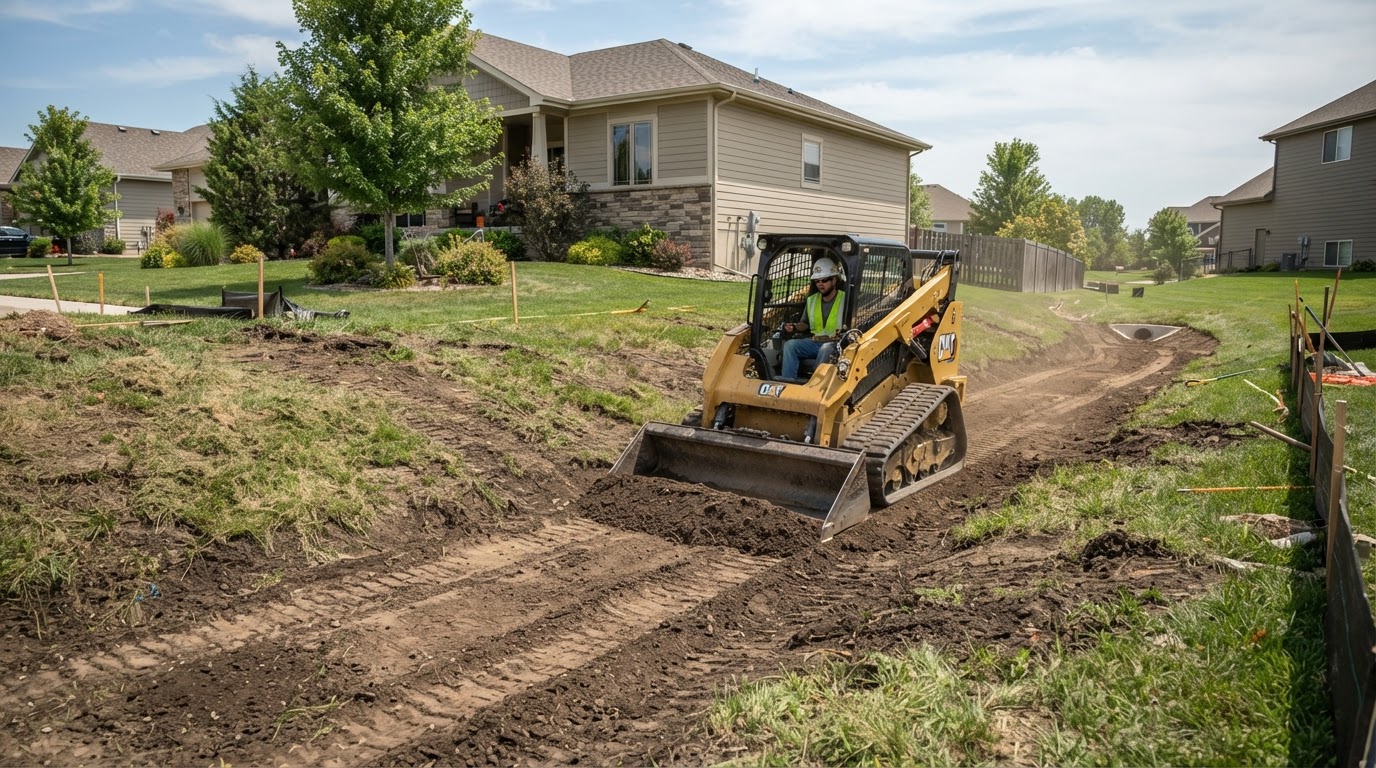
Regrading adjusts existing surface elevations to improve how water moves across a property. If the ground slopes toward a structure or a low area, regrading can redirect flow along an approved path to a suitable outlet. Regrading may involve fill placement, cut excavation, or both — and must account for existing improvements, property boundaries, neighboring drainage patterns, and the site’s soil conditions. Not every drainage problem can be solved by regrading alone.
Swales Versus Underground Drainage
Swales and regrading manage water at the surface. Underground pipes, French drains, catch basins, and larger stormwater facilities manage water below ground or through collection structures. Surface approaches are simpler and less expensive when the site allows them, but they may not handle high-volume or concentrated flows. Underground systems may be needed where surface conveyance is impractical or where the water source is subsurface. Many properties benefit from a combination of both.
Planning Swales & Surface Regrading near Myrtle Beach
Swales and regrading depend on the site’s existing elevations, drainage routes, and physical constraints. These planning considerations help define the scope.
Evaluating Existing Slopes and Runoff
Existing elevations determine whether gravity flow is achievable across the proposed swale or regrading route. Flow routes must be identified — where does water currently go, and where should it go? Surface conditions, including vegetation, soil type, and existing landscaping, affect how the ground responds to regrading. Property boundaries, structures, and other improvements constrain where the grade can be adjusted. The available drainage outlet must be confirmed as suitable before any earthwork begins.
Establishing Appropriate Grade Transitions
Proposed grades must create a continuous, gentle slope from the collection area to the outlet — without abrupt drops that cause erosion or flat sections that interrupt flow. Maintenance access should be considered so the swale can be mowed and kept clear. Erosion control measures may be needed during and after grading to protect the newly shaped surface. Where required by the site or the applicable authority, work should follow suitable plans rather than improvised grades. We do not prescribe universal swale slopes or dimensions — each project is planned for the specific property.
Swale & Regrading Considerations in Myrtle Beach
Several site-specific factors determine what swale and regrading work is practical and what the project scope involves.
Factors That Influence Swale & Regrading Scope
- Yard size — available area for the swale or regrading footprint
- Existing slope — whether enough fall exists for gravity flow
- Available elevation changes — the drop from collection area to outlet
- Soil conditions — stability, permeability, and erosion potential
- Groundwater — seasonal saturation that may affect surface grading
- Obstacles — existing structures, trees, and landscape features
- Existing landscaping — vegetation that may need protection or removal
- Discharge limitations — outlet availability and elevation constraints
- Long-term vegetation — mowing and maintenance of the swale surface
- Maintenance access — ability to reach and upkeep the graded area
We do not prescribe universal swale slopes, dimensions, or hydraulic capacity. Each project is evaluated based on its actual site conditions and available drainage route.
Swales & Regrading FAQs near Myrtle Beach
Discuss Swales & Regrading near Myrtle Beach
Share the property location, existing slopes, where water accumulates, and any drainage concerns. If swales or regrading are suitable for your site, we will discuss the grading scope, outlet options, and next steps.
Related Services
Additional drainage pages — including Flood Mitigation Grading and Lot Drainage for New Construction — will be linked here once those pages are published.