Lot Raising & Pad Elevation
Lot Raising & Pad Elevation Myrtle Beach
Raising a lot or building pad means placing fill to bring the ground to a specified elevation — one defined by approved plans, drainage requirements, and applicable flood or building-code regulations. It is not as simple as adding dirt. The fill must be suitable, the drainage impacts must be evaluated, and the finished elevation must meet the requirements that govern the property. Whether the project involves raising a building pad above base flood elevation or adjusting a broader lot grade, the scope is defined by your property’s conditions and the approved documents that control the work. Share your plans and we will discuss the elevation work that fits your site.
Lot Raising & Pad Elevation in Myrtle Beach
Elevation changes serve different purposes depending on the project. Understanding the intended outcome helps define the scope, the fill requirements, and the coordination needed.
Raising Proposed Residential Building Areas
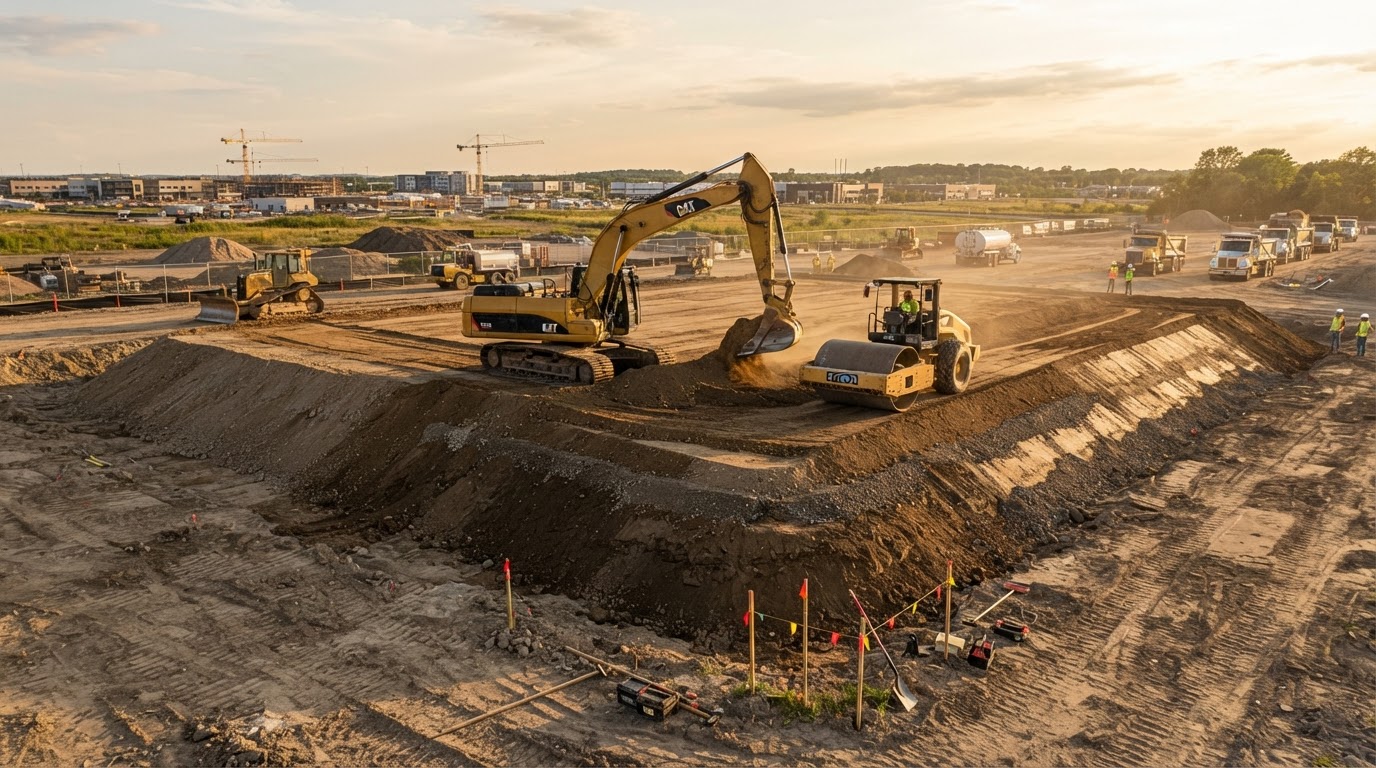
Residential building pad elevation involves placing approved fill to raise the construction footprint to the elevation specified by the approved plans. The fill must be suitable for structural use, placed in lifts, and compacted to the required density. The proposed pad grade, the construction plans, and the site's access all influence the scope. The surrounding lot may also need grade transitions so the raised pad connects to the existing ground without creating drainage problems.
Elevation Adjustments for Property Development
Broader lot raising adjusts the elevation of a larger property area, which may involve greater fill volumes and more complex drainage planning. The raised area must drain appropriately, and the grade transitions to adjacent properties must be considered. If the property is in a flood zone, the approved plans and floodplain regulations define what the finished elevation must achieve. Lot raising interacts with drainage, neighboring land, and any applicable environmental review.
Building Pad Elevation near Myrtle Beach
Raising a building pad is a targeted scope — it focuses on the construction footprint rather than the entire lot. The pad must reach the specified elevation, which may be above base flood elevation when the property is in a flood zone. The fill depth, material type, and compaction requirements vary by project and are defined by the approved plans. Raising a pad does not automatically change the property's flood-zone designation or eliminate all flood risk — the approved design and the applicable regulations govern what the finished work must achieve.
Planning Lot Elevation Work near Myrtle Beach
A productive elevation discussion starts with understanding the existing ground, the required elevations, and the conditions that affect fill placement. These are the planning considerations that help define the scope.
Existing Grades and Approved Elevation Requirements
Several elevation references may be relevant: the existing ground elevation, the proposed finished grade, the building pad elevation, the finished floor elevation, and — when the property is in a flood zone — the base flood elevation. The approved site plan or grading plan defines the required elevations and how the finished grade must transition. Understanding the difference between existing and required elevations determines how much fill is needed and how the grade transitions to surrounding ground and adjacent properties.
Fill Placement and Site Coordination
Fill placement must coordinate with the approved plans, material suitability, quantity calculations, drainage, soil conditions, and any required inspections or testing. The fill material must meet the specifications defined by the approved plans or geotechnical report, and compaction may need to be verified. Drainage impacts on adjacent properties must be considered — the raised area should not direct runoff onto neighboring land. We coordinate around these requirements but do not perform surveying, engineering, or elevation certification.
Lot Raising Considerations in Myrtle Beach
The factors that influence lot raising and pad elevation differ by site. Understanding these variables helps you provide useful information when requesting an estimate.
Floodplain, Drainage and Fill Constraints
- Floodplain review may apply — properties in mapped flood zones have specific elevation requirements
- Fill does not automatically change a flood-zone designation — the flood map and local administrator govern that
- Higher ground does not eliminate all flood risk — the approved design and regulations control the requirement
- Adjacent drainage must be considered — raised grades should not direct runoff onto neighboring property
- Wetlands and coastal regulations may introduce additional review before fill placement
- The approved design controls the actual work — fill elevations must match the specified grades
- No universal fill heights or offsets apply — each project's requirements are property-specific
We do not provide flood guarantees, universal fill depth recommendations, or claims that raising a lot eliminates flood risk. The approved plans and applicable regulations govern what the finished elevation must achieve. Each project is evaluated based on its actual conditions.
Lot Raising & Pad Elevation FAQs near Myrtle Beach
Discuss Lot Raising & Elevation Planning in Myrtle Beach
Share your property location, the approved site or grading plans, the required pad or lot elevation, and the existing ground conditions. The more complete the information, the more productive the discussion about fill, drainage, and next steps.
Related Services
Additional resource pages — including Drainage Solutions, Flood Mitigation Grading, and Building Pads Above Base Flood Elevation — will be linked here once those pages are published.