Pond Digging & Construction
Pond Digging & Construction Myrtle Beach
A new pond starts with the right site — soil that holds water, a reliable water source, sufficient area, and conditions that can support the excavation. Pond construction is property-specific planning: the intended use, the excavation scope, the water conditions, the excavated material, and any applicable regulatory review all shape the project. Not every property can support a pond, and not every pond design works on every site. Whether you are planning a recreational pond, a livestock pond, or a landscape water feature, the scope is defined by your property’s conditions and the requirements that govern it. Share your project details and we will discuss the pond excavation that fits your site.
Pond Digging & Construction near Myrtle Beach
Pond construction serves different purposes depending on the property and the intended use. Understanding the goal helps define the excavation, the design considerations, and the coordination required.
Private Property Pond Excavation
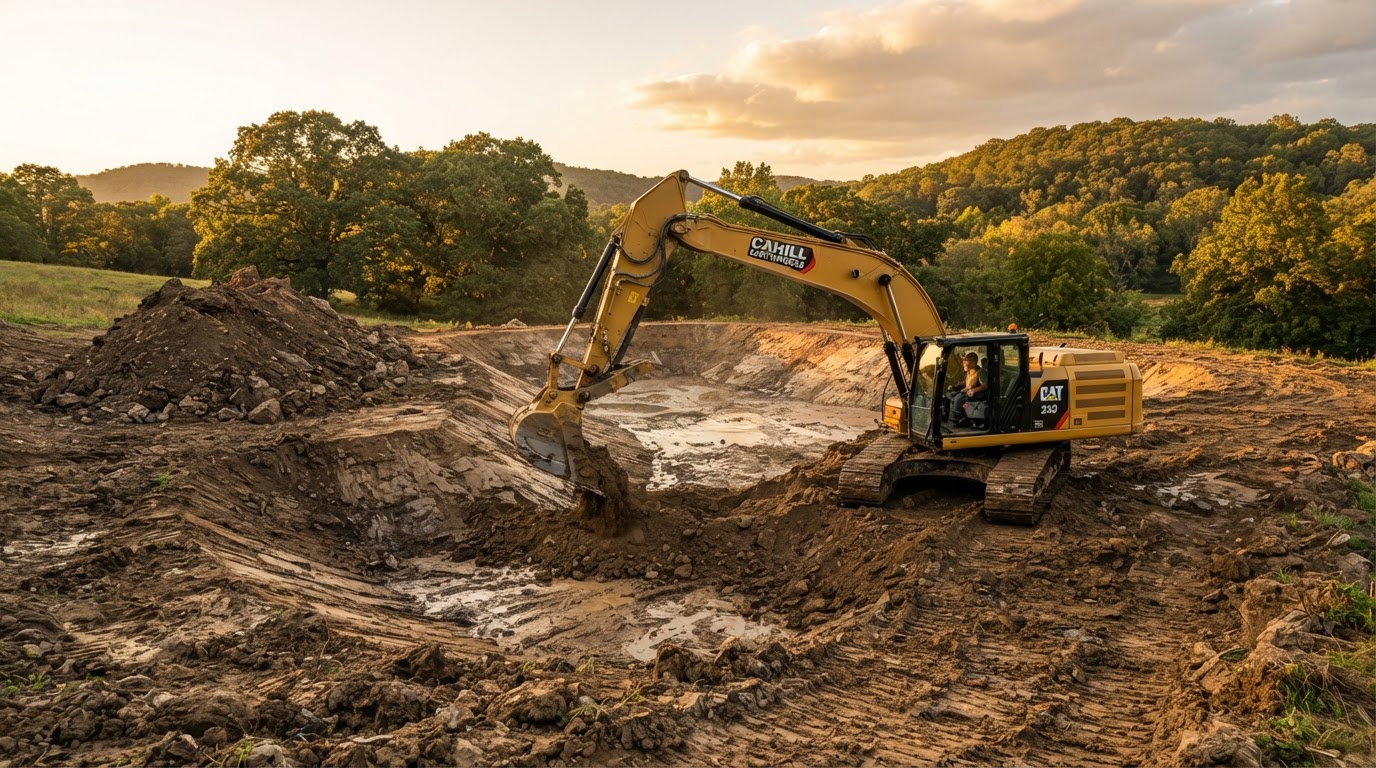
New pond planning on suitable residential, rural, or undeveloped property involves evaluating the site's ability to retain water, the water source, the available area, and the excavation access. The intended use — recreation, livestock, irrigation, or landscape — influences the pond's depth, slope, and shoreline design. The soil conditions, the existing topography, and any applicable regulations all determine whether the site can support a pond and what the excavation involves.
Pond Construction for Larger Parcels
Larger parcels may offer more flexibility for pond location and size, but the same site conditions apply — soil permeability, water source, and regulatory considerations. The intended use, the accessible work areas, the excavated material's disposition, and the site conditions all influence the scope. A larger pond may involve more extensive excavation, greater material handling, and potentially more complex regulatory review if the site is near wetlands or regulated waters.
Pond Excavation Versus Stormwater Facilities
Private ponds and engineered retention or detention ponds can involve different functions and project requirements. A private recreational or landscape pond is designed for its intended use, while a stormwater facility is designed to manage runoff under an approved engineering plan. The two are not interchangeable — a stormwater facility must meet the approved design's specifications, and a private pond does not serve the same regulatory function. We do not market engineered stormwater facilities as ordinary recreational ponds.
Planning Pond Construction in Myrtle Beach
A productive pond discussion starts with understanding the site and the intended use. These are the planning considerations that help define the scope.
Evaluating the Proposed Pond Location
The intended use, available area, property boundaries, existing topography, water sources, soil conditions, groundwater, existing drainage, and excavation access all define the pond's feasibility and scope. The soil's ability to retain water is critical — clay or low-permeability soils generally hold water better than sandy or gravelly material. The water source — groundwater, runoff, or a combination — must be sufficient to fill and maintain the pond. If the property is near wetlands, jurisdictional waters, or floodplain, additional review may apply before excavation can proceed.
Excavated Material and Site Coordination
Earth removal, material stockpiling, potential reuse where appropriate, hauling, approved work areas, and professional design or review where applicable all factor into the project. The excavated material may be used for berms or embankments, spread onsite, or hauled offsite depending on its suitability and the property's needs. Material should not be placed in wetlands or adjacent waters without proper authorization. If the pond requires a professional design — for dam safety, water control, or regulatory compliance — those services come from the appropriate licensed professionals. We coordinate around those requirements but do not independently prepare dam designs or regulatory documents.
Pond Excavation Considerations near Myrtle Beach
The factors that influence pond construction differ by site. Understanding these variables helps you provide useful information when requesting an estimate.
Groundwater, Wetlands and Excavation Conditions
- Soil permeability — whether the excavated basin will retain water
- Water retention considerations — clay content and natural sealing
- Groundwater — the water table's influence on the pond's water source
- Access — entry conditions for excavation equipment
- Excavation dimensions — the pond's depth, area, and shape
- Material handling — excavated earth's disposition and hauling
- Erosion — shoreline and embankment stability
- Existing water features — interaction with drainage and waterways
- Potential regulatory review — wetlands, floodplain, or dam safety
We do not prescribe universal pond depths, slopes, dam designs, or water-control methods without applicable approved plans. We do not guarantee that a pond will retain water or that a project is permit-free. Wetlands, jurisdictional waters, and ordinary surface water are distinct regulatory categories. Each project is evaluated based on its actual conditions and requirements.
Pond Digging & Construction FAQs in Myrtle Beach
Discuss Pond Construction near Myrtle Beach
Share your property location, the intended pond use, the available area, the existing topography, and the water source. The more complete the picture, the more productive the discussion about site feasibility, excavation scope, and next steps.
Related Services
Additional resource pages — including Pond Cleanout & Dredging, Retention & Detention Pond Construction, Wetland-Adjacent Land Clearing, and Wetland Permitting Coordination — will be linked here once those pages are published.