
Trenching & Utility Excavation
Trenching & Utility Line Excavation Myrtle Beach
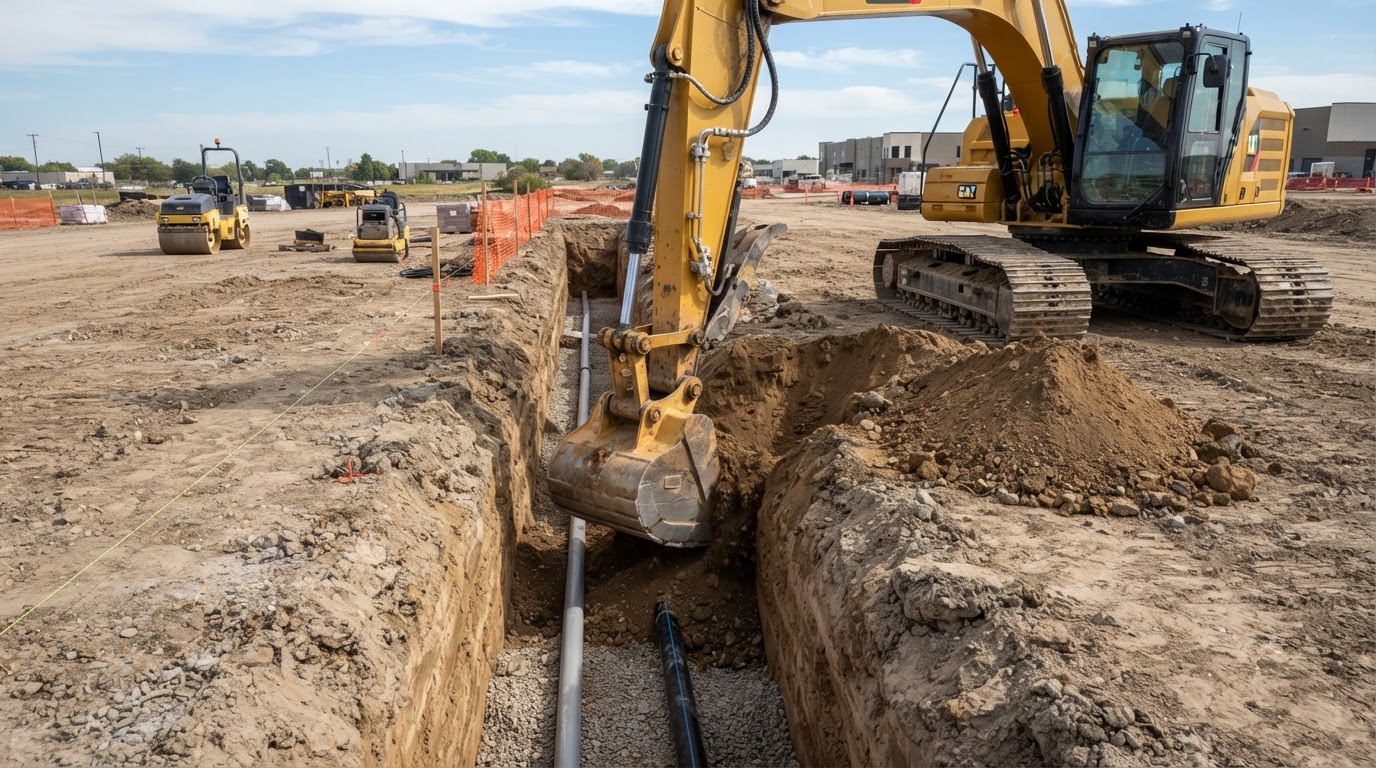
Utility trenching is the excavation that supports underground utility work — water, sewer, drainage, electrical, gas, or communication lines installed beneath the ground. The trench provides access for the utility contractor to install, connect, or repair the line, and the excavation is then backfilled and the surface restored. The scope depends on the approved trench route, the depth, the soil conditions, the existing underground infrastructure, and the coordination with the responsible utility contractor. We handle the excavation; the utility installation itself is performed by the appropriate contractor. Share your project plans and we will discuss the trenching scope that fits the site.
Utility Trenching Services in Myrtle Beach
Utility trenching supports a range of underground infrastructure projects. The excavation creates the trench; the utility contractor installs the line. Understanding the project type helps define the excavation scope, the equipment, and the coordination required.
Excavation for Underground Utility Routes
Trench excavation for underground utilities involves opening a controlled cut along an approved route, to a specified depth and width, so the utility contractor can install the line. The trench dimensions depend on the utility type, the line size, the required burial depth, and the approved plans. Existing utilities must be located before excavation begins. The soil conditions, groundwater, and surface materials all influence the excavation method and the equipment needed. The trench is backfilled after the utility work is complete.
Residential Utility Trenching near Myrtle Beach
Residential utility trenching may support a new home’s water, sewer, or electrical service, connect a detached structure, or repair an existing line. The scope depends on the trench length, the depth, the soil conditions, the existing landscaping, and the access from the road to the work area. Coordination with the utility provider and the building contractor helps sequence the trench with the overall construction. The surface restoration — backfill, compaction, and finish — depends on the location and the applicable requirements.
Commercial Utility Excavation
Commercial utility excavation often involves longer trench routes, deeper cuts, coordination with multiple utility providers, and integration with the site’s overall infrastructure plan. The scope depends on the approved site plans, the utility layout, the existing underground infrastructure, and the construction schedule. Equipment access, material handling, and surface restoration all factor into the project. We excavate the trench and coordinate with the utility contractors, but we do not install, connect, test, or commission regulated utility systems unless that scope is specifically confirmed.
Planning Utility Line Excavation near Myrtle Beach
A productive trenching discussion starts with understanding the utility project, the approved route, and the site conditions. These are the planning considerations that help define the excavation scope.
Utility Locating and Required Notifications
Before any excavation begins, existing underground utilities must be located. Utility locating services and required notifications identify existing infrastructure so the trench route can be planned to avoid conflicts. The approved trench route, the excavation dimensions from the plans, the equipment access to the work area, and the coordination with the responsible utility contractor all define the project. If the utility installation is part of a larger construction project, the overall site plan helps sequence the trench with other work. Professional oversight may be required for deeper trenches or complex utility conflicts.
Existing Infrastructure and Site Access
Existing underground infrastructure, surface materials, and the access from the road to the trench location all influence the excavation. Pavement may need cutting, landscaping may need protection, and the soil conditions determine whether shoring or protective measures are needed for deeper trenches. The equipment must be able to reach the work area, and the material removed from the trench must be managed. Coordination with the utility contractor ensures the trench is excavated to the correct dimensions and the installation can proceed efficiently.
Trenching Considerations in Myrtle Beach
The variables that influence a trenching project differ by site. Understanding these factors helps you provide useful information when requesting an estimate.
Depth, Soil, Groundwater and Surface Conditions
- Excavation depth — the required burial depth for the utility
- Soil conditions — sand, clay, rock, or mixed material
- Groundwater — high water table or seasonal saturation
- Utility conflicts — existing lines that affect the route
- Existing pavement — surface materials that need cutting
- Material removal — excavated soil handling and hauling
- Equipment access — entry width and route to the work area
- Restoration — backfill, compaction, and surface finish
We do not provide instructions for trench entry, sloping, shoring, or excavation safety procedures. Trench safety is the responsibility of the parties performing the work in accordance with applicable regulations. Estimate factors differ by site and application — each project is evaluated based on its actual conditions.
Utility Trenching FAQs near Myrtle Beach
Discuss Utility Trenching in Myrtle Beach
Share your project location, the approved utility plans, the proposed trench route, the existing site conditions, and the utility coordination requirements. The more complete the picture, the more productive the discussion about excavation scope, access, and next steps.