
Storm Drain Infrastructure
Catch Basin & Storm Drain Installation Myrtle Beach
Catch basins and storm drains are infrastructure used to collect surface runoff at specific points and convey it underground through a pipe system to an approved discharge location. The installation depends on the collection point, the pipe route, the available outlet elevation, existing utilities, and any approved drainage plans that govern the property. We help property owners and project decision-makers evaluate whether a catch basin and storm drain system fits their drainage needs. Share your property details and we will discuss the installation scope that applies to your site.
Catch Basin & Storm Drain Installation in Myrtle Beach
Catch basins and storm drains manage surface water that cannot be adequately handled by surface grading alone. Understanding the applications and limitations helps determine whether this infrastructure is the right drainage approach for the property.
Catch Basins for Surface Water Collection
Catch basins collect surface runoff through grated inlets installed at low points where water naturally accumulates. Suitable applications include paved surfaces, driveway low areas, landscaped collection points, and locations where surface flow concentrates. The basin captures sediment in its sump while conveying water through an outlet pipe to a discharge point. The collection point must connect to a pipe route that can reach a suitable outlet at the right elevation.
Underground Storm Drain Systems near Myrtle Beach
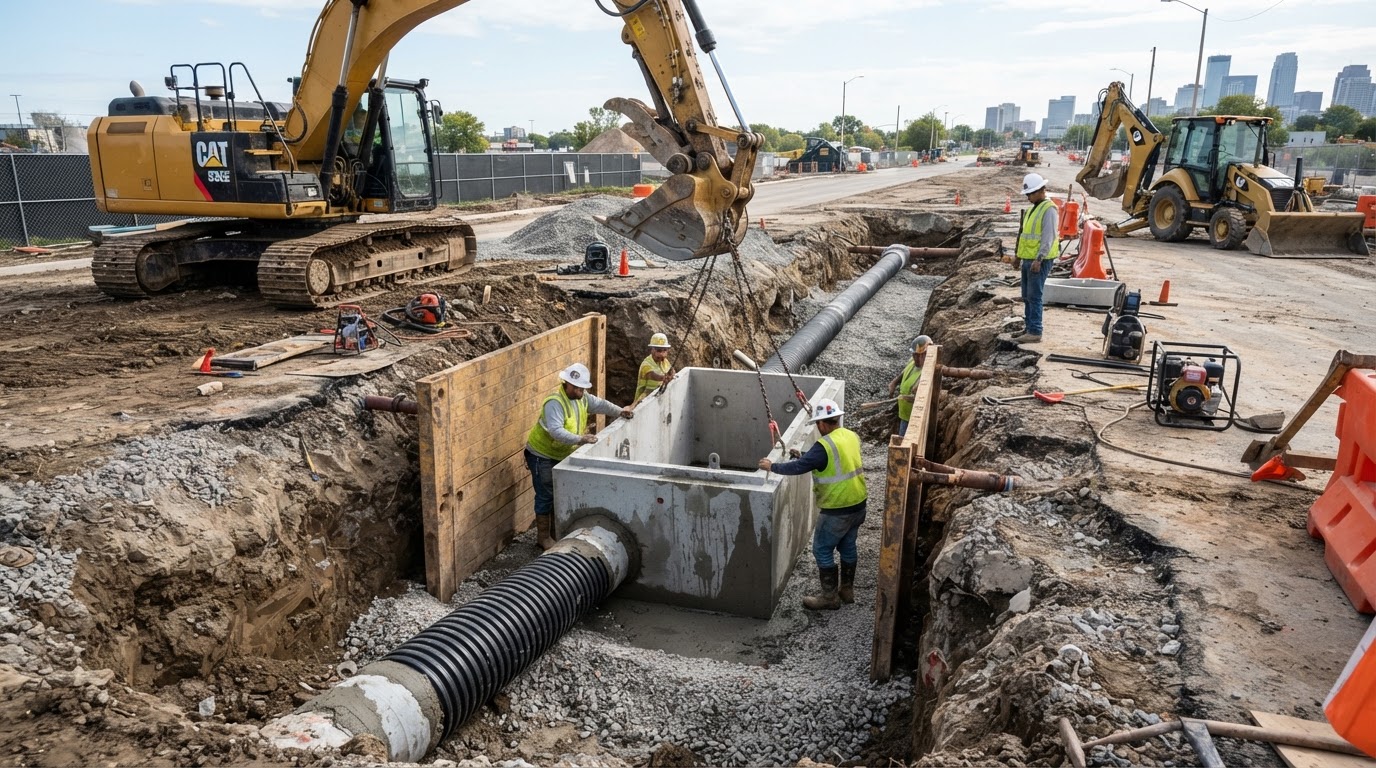
Underground storm drain systems use a network of pipes, catch basins, and collection structures to convey surface water from multiple collection points to a common discharge location. The system must be designed with appropriate pipe sizing, slope, and alignment to achieve gravity flow. Installation involves excavation, pipe placement, structure installation, backfill, and surface restoration. The scope depends on the system’s complexity and the site’s conditions.
Residential and Commercial Drainage Infrastructure
Residential and commercial drainage infrastructure differ in scale, applicable plans, and coordination requirements. A residential catch basin system may serve a single yard or driveway. A commercial system may be part of an approved stormwater management plan with specific design requirements, maintenance obligations, and regulatory compliance. We do not imply that privately installed catch basins may connect to municipal storm drains without authorization — the applicable requirements must be confirmed for each property.
Planning Storm Drain Installation near Myrtle Beach
Catch basin and storm drain installation requires understanding the site’s drainage conditions and the requirements that apply. These planning considerations help define the scope.
Evaluating Collection Points and Pipe Routes
Existing grades determine where surface water collects and where a catch basin should be placed. Runoff direction identifies the natural low points that need collection. Surface collection areas must be connected to pipe alignments that can reach an approved outlet at the right elevation. Existing utilities — water, sewer, gas, electric, and communications — must be located and avoided along the pipe route. Site access for excavation equipment and the connection point to the discharge location are critical planning factors that must be confirmed before installation.
Coordinating Drainage Plans and Installation
Physical installation of catch basins and storm drains is distinct from professional drainage-system design. Where engineering is required — for commercial stormwater management systems, regulated connections, or complex drainage designs — the installation should follow applicable approved plans prepared by a qualified professional. We do not claim to provide engineering design or professional drainage-system certification. The installation scope depends on what the approved plans require and what the site conditions allow.
Catch Basin Installation Considerations in Myrtle Beach
Several site-specific factors determine what catch basin and storm drain installation is practical and what the project scope involves.
Factors That Influence Installation Scope
- Drainage area — the surface area contributing runoff to the collection point
- Proposed inlet locations — where catch basins should be placed
- Pipe routes — the underground path from collection to outlet
- Underground utilities — existing lines that may conflict with excavation
- Existing pavement — surfaces that must be restored after installation
- Excavation depth — the depth needed to achieve proper pipe slope
- Approved outlets — discharge points and their elevation
- Soil and groundwater conditions — stability and water table influences
- Maintenance requirements — long-term upkeep of basins, grates, and pipes
- Applicable review — permits, easements, or regulatory coordination
We do not prescribe universal inlet sizes, pipe slopes, or stormwater design capacities. Each installation is planned based on the site’s actual conditions and any applicable approved drainage plans.
Catch Basin & Storm Drain FAQs near Myrtle Beach
Discuss Catch Basin Installation in Myrtle Beach
Share the property location, where water collects, the distance to a potential outlet, and any existing drainage features or utilities. If a catch basin and storm drain system is suitable for your site, we will discuss the installation scope, pipe routing, and next steps.
Related Services
Additional drainage pages — including Downspout & Underground Drain Lines, Stormwater Management Systems, and Lot Drainage for New Construction — will be linked here once those pages are published.