
Subsurface Drainage
French Drain Installation Myrtle Beach
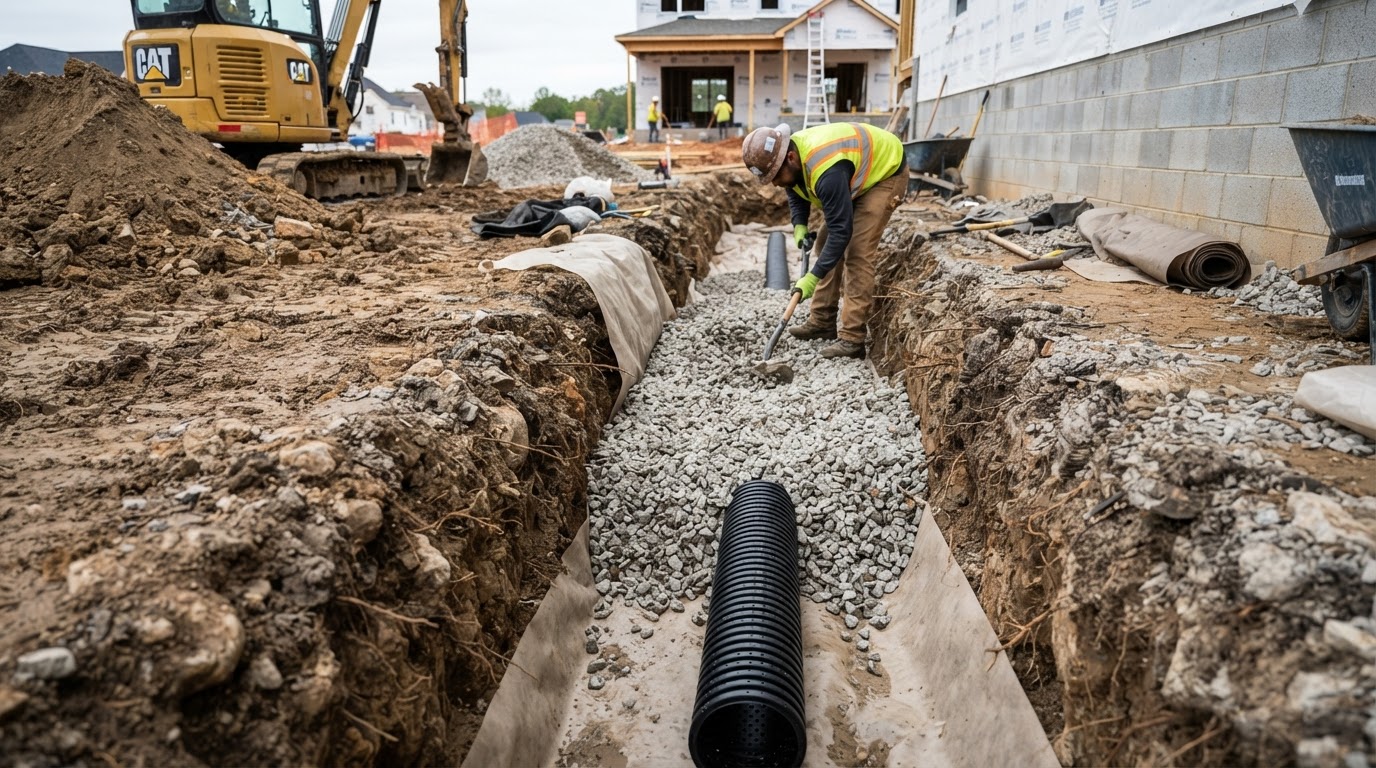
A French drain is a subsurface drainage system that collects groundwater through an aggregate-filled trench and perforated pipe, then conveys it by gravity to an approved outlet. French drains can be an effective solution when water moves through soil and accumulates in specific areas of a Myrtle Beach property — but only when the site conditions, soil permeability, and available discharge elevation support the approach. We help property owners evaluate whether a French drain is the right solution for their drainage concern. Share your property details and we will discuss whether French drain installation fits your site.
French Drain Installation near Myrtle Beach
French drains address a specific category of drainage problem — subsurface water moving through soil. Understanding when a French drain is appropriate, and when another drainage approach is better suited, helps ensure the installed system actually resolves the problem.
Subsurface Drainage for Residential Properties
French drains are most appropriate when water moves through soil and accumulates along a foundation, in a landscaped area, or beneath a yard surface. The aggregate trench intercepts groundwater before it reaches the surface or a structure. This application depends on the surrounding soil being permeable enough to deliver water to the trench and the outlet being low enough for gravity discharge. Properties with heavy clay soil or a high water table may not be suitable candidates.
Drainage Along Suitable Property Areas in Myrtle Beach
French drains can be installed along landscaped areas, property edges, or other approved drainage routes where subsurface water needs to be collected and conveyed. The trench route must avoid underground utilities, respect property boundaries, and connect to a discharge point that is lower than the drain invert. The installation must be coordinated with existing site features and any approved drainage plans that govern the property.
French Drains Versus Surface Drainage
French drains, catch basins, swales, and regrading each address different types of water-management problems. French drains manage subsurface water. Catch basins collect surface runoff through grated inlets. Swales and regrading shape the ground surface to direct water along approved routes. Choosing the right system — or combination of systems — depends on whether the water problem is surface, subsurface, or both, and what the site’s conditions allow.
Planning a French Drain System in Myrtle Beach
A French drain’s performance depends on site conditions that must be evaluated before installation. These planning considerations help define the scope.
Evaluating Groundwater and Soil Conditions
The first consideration is whether the drainage problem is actually subsurface. Existing soil conditions — permeability, composition, and compaction — determine whether water can reach the trench. Groundwater influences, including the seasonal water table depth, affect whether the drain can discharge by gravity. The intended drainage route must be surveyed for elevation drop from the collection area to the outlet. Site grading, existing drainage features, and the overall drainage system suitability all factor into whether a French drain is the right approach.
Drainage Outlet and Installation Planning
A French drain requires a discharge outlet at a lower elevation than the collection point. Appropriate collection areas, pipe routing, and available discharge locations must be confirmed before installation begins. Underground utilities — water, sewer, gas, electric, and communications — must be located and avoided. Site access for excavation equipment, the volume of aggregate and pipe required, and long-term maintenance considerations all influence the installation plan. We do not prescribe universal pipe dimensions, trench depths, or discharge designs — each system is planned for the specific property.
French Drain Considerations near Myrtle Beach
Several site-specific factors determine whether a French drain will perform as intended and what the installation scope involves.
Factors That Influence French Drain Suitability
- Soil permeability — whether water can reach the trench through surrounding soil
- High groundwater — whether the water table sits above the drain invert
- Outlet elevation — whether a discharge point is low enough for gravity flow
- Existing utilities — underground lines that may conflict with the trench route
- Surface runoff — whether surface water also needs to be managed separately
- Nearby foundations — proximity to structures and potential moisture impacts
- Maintenance requirements — sediment, root intrusion, and outlet blockage
- Property-specific limitations — easements, boundaries, and site access
We do not promise that a French drain can lower groundwater sufficiently in every condition. Performance depends on soil permeability, water table depth, outlet elevation, and ongoing maintenance. Each project is evaluated based on its actual site conditions.
French Drain Installation FAQs in Myrtle Beach
Discuss French Drain Installation near Myrtle Beach
Share the property location, where water accumulates, how long it persists, and any known soil or groundwater conditions. If a French drain is suitable for your site, we will discuss the installation scope, outlet options, and next steps.
Related Services
Additional drainage pages — including Downspout & Underground Drain Lines and Crawl Space Drainage & Grading — will be linked here once those pages are published.