
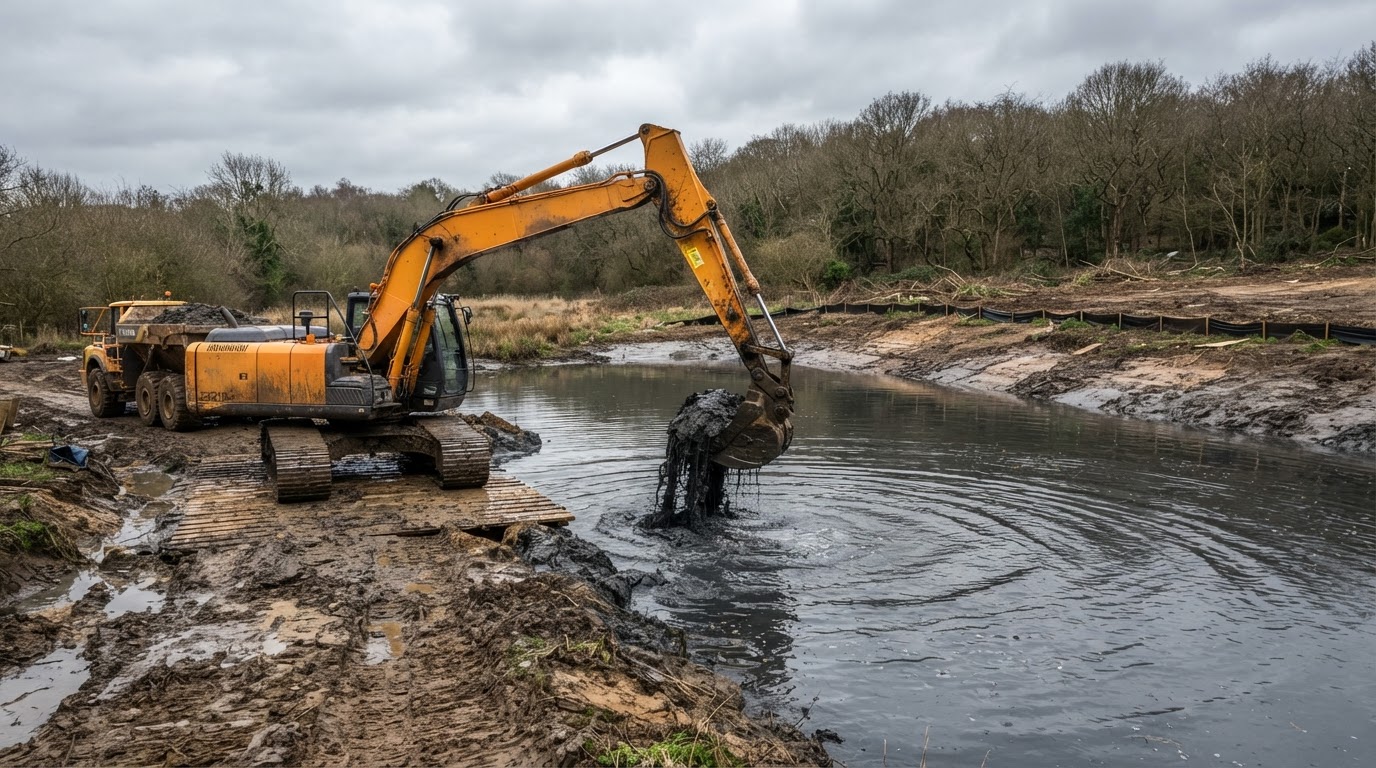
Pond Cleanout & Dredging
Pond Cleanout & Dredging Myrtle Beach
An existing pond that has filled with sediment, vegetation, and debris loses capacity, becomes shallower, and may stop functioning the way it was designed to. Pond cleanout and dredging address that accumulated material to restore depth and improve the pond’s condition. The scope depends on the sediment volume, water levels, equipment access, the sediment’s character, and any applicable environmental or drainage review. Whether the pond is private, agricultural, or part of a stormwater system, the work is defined by its actual conditions. Share your pond’s details and we will discuss the cleanout scope that fits the site.
Pond Cleanout & Dredging near Myrtle Beach
Pond maintenance serves different purposes depending on the pond’s intended use, its current condition, and how it interacts with the surrounding property. Understanding the goal helps define the sediment removal approach, the equipment needed, and the coordination required.
Sediment Removal From Existing Ponds
Over time, ponds accumulate sediment from runoff, erosion, decaying vegetation, and natural processes. The pond becomes shallower, its capacity decreases, and its function may be compromised. Sediment removal restores depth and capacity by excavating the accumulated material. The approach depends on the sediment depth, the water level, the pond’s size, and whether the material can be removed with the pond full or whether dewatering is required. The sediment’s character and volume determine the equipment and the disposal method.
Pond Maintenance and Excavation in Myrtle Beach
Regular pond maintenance may involve removing vegetation that has encroached on the shoreline, clearing debris, addressing localized sediment buildup, or reprofiling areas that have eroded. More extensive maintenance may require excavation equipment to reach the sediment, which depends on the access conditions — the shoreline’s slope, the surrounding terrain, and whether equipment can reach the water’s edge without damaging the banks. The maintenance objective — restoring capacity, improving appearance, or addressing a drainage problem — shapes the scope.
Private Property and Stormwater Pond Considerations
Private ponds and stormwater ponds can involve different considerations. A private recreational or agricultural pond is maintained for its intended use, while a stormwater pond may be part of an approved drainage system with specific design requirements. Cleanout of a stormwater pond may need to restore the approved capacity and may involve coordination with the entity responsible for the drainage system. The two are not interchangeable — a stormwater pond must meet its approved design, and a private pond does not serve the same regulatory function.
Planning a Pond Cleanout in Myrtle Beach
A productive pond cleanout discussion starts with understanding the existing pond, the sediment conditions, and the intended outcome. These are the planning considerations that help define the scope.
Existing Pond Dimensions and Sediment Conditions
The pond’s current dimensions, the estimated sediment depth, the water level, and the sediment’s character all define the cleanout scope. Equipment access to the shoreline — the slope, the surrounding terrain, and whether machinery can reach the water — determines what equipment can be used. Dewatering may be required if the water level prevents direct sediment removal, which adds water management to the scope. The sediment’s character affects how it is handled, dried, and disposed of or repurposed. Any available pond history, previous maintenance records, or design documents help clarify the project.
Environmental and Drainage Review
If the pond is connected to jurisdictional waters, located in a regulated floodplain, or part of an approved stormwater system, environmental or drainage review may apply before cleanout can proceed. The removed sediment may require characterization before disposal. Dewatering discharge may need to meet applicable water quality or drainage requirements. The property’s location and the pond’s function determine what review is needed. We coordinate around those requirements but do not independently prepare or approve environmental permits, regulatory documents, or engineered stormwater designs.
Pond Dredging Considerations near Myrtle Beach
The factors that influence a pond cleanout project differ by site. Understanding these variables helps you provide useful information when requesting an estimate.
Sediment Volume, Water Conditions and Material Handling
- Sediment volume — estimated depth and area of accumulated material
- Water conditions — current water level and whether dewatering is needed
- Equipment access — shoreline slope, terrain, and entry conditions
- Sediment character — organic muck, sand, clay, or mixed material
- Material handling — drying, stockpiling, spreading, or hauling
- Shoreline stability — bank conditions and erosion potential
- Regulatory dependencies — environmental, drainage, or stormwater review
- Restoration — shoreline reprofiling or replanting where needed
Removed sediment should not be assumed to be uncontaminated or suitable for unrestricted placement onsite. Its disposition depends on the material’s actual condition and any applicable requirements. We do not guarantee that a pond cleanout eliminates all drainage concerns or that it is exempt from regulatory review. Each project is evaluated based on its actual conditions.
Pond Cleanout Questions in Myrtle Beach
Discuss Pond Cleanout Services near Myrtle Beach
Share your pond's location, its current condition, the approximate sediment depth, the water level, and the equipment access. The more complete the picture, the more productive the discussion about cleanout scope, dewatering, material handling, and next steps.
Related Services
Additional resource pages — including Retention & Detention Pond Construction, Stormwater Management Systems, and Sediment & Erosion Maintenance — will be linked here once those pages are published.