
Access Road Construction
Access Road Construction Myrtle Beach
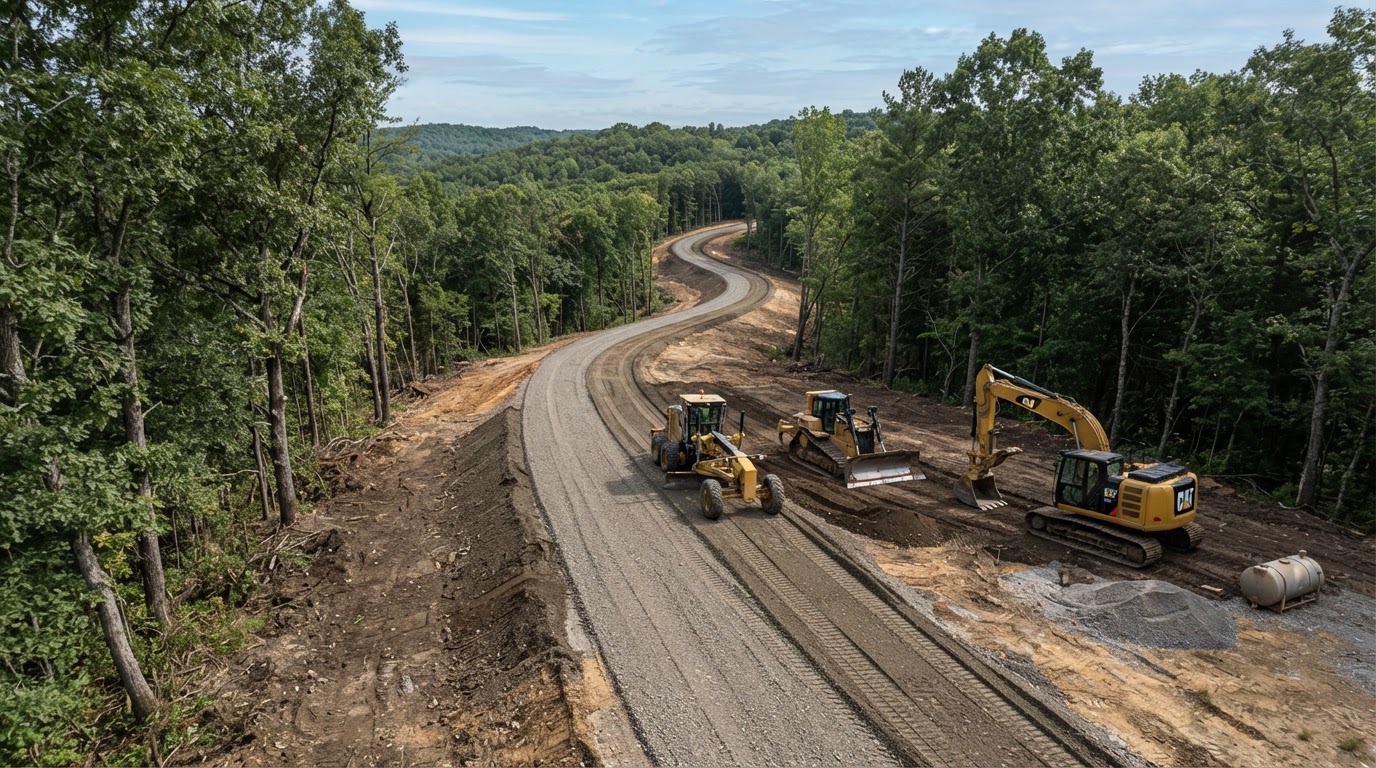
Access road construction creates the route that connects a property to the public road — clearing the corridor, grading the alignment, placing suitable base and surface material, and addressing drainage along and across the road. The scope depends on the road length, the terrain, the soil conditions, the intended vehicle traffic, any drainage crossings, and the property owner’s authorization. Whether the road serves a residential homesite, a rural parcel, or a commercial property, the construction is defined by the site’s conditions and the access requirements. Share your property details and we will discuss the access road scope that fits your site.
Access Road Construction near Myrtle Beach
Access roads serve different purposes depending on the property and the intended traffic. Understanding the road’s purpose helps define the clearing, grading, material, and drainage requirements.
Rural Property Access Roads
Rural access roads connect undeveloped or agricultural parcels to the public road system. These roads may be longer, pass through wooded or uneven terrain, and need to support construction equipment, delivery vehicles, or agricultural traffic. The scope includes clearing the route, grading the alignment, placing suitable aggregate, and addressing drainage crossings. The road’s length, the terrain, the soil conditions, and the intended traffic all influence the construction approach. The property owner’s authorization and any right-of-way or access rights must be confirmed before construction.
Construction Access Routes in Myrtle Beach
Construction access routes provide the path for equipment and material delivery during a construction project. These routes may need to support heavy loads, including concrete trucks, delivery vehicles, and excavation equipment. The base preparation and material specifications may be more substantial than a residential driveway, particularly if the route crosses soft ground or drainage. The access route is part of the overall site preparation and is coordinated with the construction schedule. Once construction is complete, the route may remain as the permanent access road or be restored to its previous condition.
Private Road Preparation and Grading
Private road preparation involves grading the existing ground to create a stable base, placing suitable aggregate or surface material, and shaping the road to drain properly. The grade, the crown, and the drainage along the road all affect its performance and longevity. Culverts may be needed where the road crosses drainage paths. The material type and depth depend on the intended traffic and the soil conditions. The road is built to serve the property’s access needs, not to public-road standards unless specifically required by the controlling authority.
Planning Access Road Construction in Myrtle Beach
A productive access road discussion starts with understanding the property, the proposed route, and the intended use. These are the planning considerations that help define the scope.
Road Alignment, Authorization and Drainage
The proposed road alignment depends on the property’s topography, the intended access point on the public road, the terrain, and the drainage patterns. The property owner’s authorization and any right-of-way or access rights must be confirmed before construction. The intended traffic — residential vehicles, construction equipment, or agricultural traffic — defines the road’s width, base, and material requirements. Existing grades, drainage routes, and any required culvert crossings all factor into the alignment and the construction scope. Approved material specifications, where applicable, define the base and surface requirements.
Clearing, Base Material and Drainage Crossings
If the road route passes through wooded or overgrown areas, clearing is needed before grading can begin. The base material — crushed aggregate, gravel, or similar material — is placed over the prepared ground to create a stable running surface. Drainage along the road and at crossings must be addressed to prevent erosion and maintain the road’s integrity. Culverts may be needed where the road crosses drainage paths. The clearing, the grading, the base placement, and the drainage work are all part of the access road construction scope and are coordinated as a single project.
Access Road Construction Considerations near Myrtle Beach
The variables that influence an access road project differ by site. Understanding these factors helps you provide useful information when requesting an estimate.
Length, Terrain, Materials and Drainage
- Road length and width — the corridor dimensions
- Terrain — existing grades, slopes, and topography
- Vegetation — clearing scope along the route
- Fill requirements — material needed to achieve grade
- Aggregate — base and surface material type and quantity
- Drainage — roadside ditches, swales, and runoff management
- Culvert crossings — where the road crosses drainage paths
- Soil conditions — bearing capacity and stability
- Equipment access — entry conditions for construction equipment
- Maintenance expectations — ongoing road upkeep needs
Not all access roads meet public-road specifications, and not all road types can be constructed without approval from the controlling road authority. If the road connects to a public road, the access point may require an encroachment permit or approval from the responsible authority. Each project is evaluated based on its actual conditions and requirements.
Access Road Construction FAQs in Myrtle Beach
Plan an Access Road near Myrtle Beach
Share your property location, the proposed road route, the intended vehicle traffic, the existing terrain, the drainage conditions, and any required approvals. The more complete the picture, the more productive the discussion about clearing, grading, materials, and drainage crossings.