
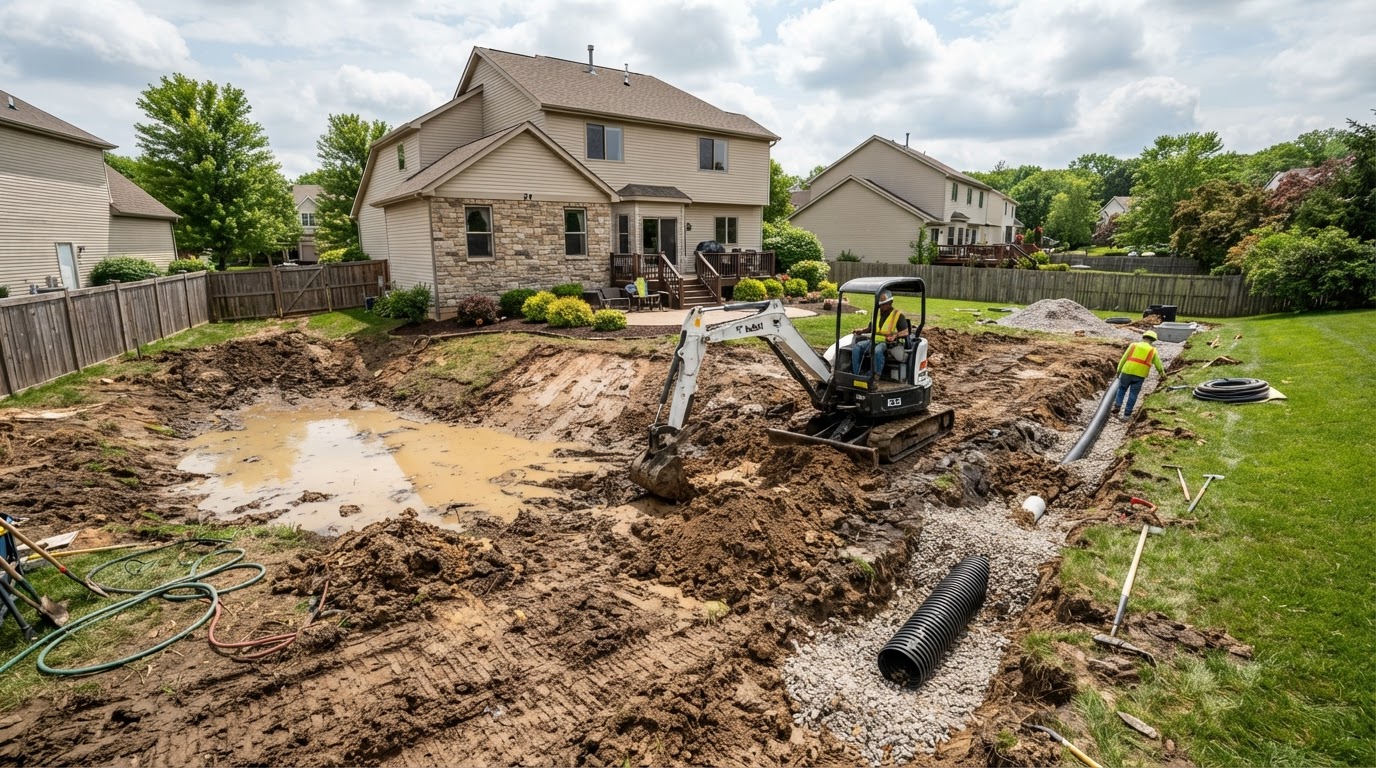
Yard Drainage Correction
Yard Drainage & Standing Water Correction Myrtle Beach
Recurring puddles, saturated turf, and low areas that never seem to dry out are common yard drainage concerns for Myrtle Beach property owners. Standing water can result from low spots, compacted soil, a high water table, downspout discharge, or grading that directs water toward the wrong area. The cause should be evaluated before choosing a corrective approach — because the right solution depends on where the water comes from and how it moves across the property. We help property owners understand the conditions and define a yard drainage scope that fits the site. Share your property details and we will discuss the drainage correction that applies to your yard.
Yard Drainage Solutions in Myrtle Beach
Yard drainage problems vary in cause and scope. Understanding the type of problem — surface ponding, groundwater saturation, downspout concentration, or a combination — helps determine which corrective approach may be appropriate.
Standing Water and Low Yard Areas
Localized ponding in low spots is one of the most common yard drainage complaints. Water follows gravity to the lowest point and collects there if the soil cannot absorb it or the surrounding grade does not provide an outlet. Surface regrading can redirect water from low areas along an approved path to a suitable discharge point. The correction depends on the size of the low area, the surrounding slopes, and the available outlet — not every low spot can be fixed by adding fill alone.
Drainage Around Existing Homes near Myrtle Beach
Yard-to-foundation grade relationships are critical for drainage around existing homes. If the ground slopes toward the foundation rather than away from it, water can collect near the structure and create moisture concerns. Downspout discharge locations, existing hardscapes, access restrictions, and the proximity of neighboring properties all influence what drainage corrections are practical. The scope must account for existing improvements that cannot be disturbed.
Surface Grading and Drainage Installations
Yard drainage corrections can involve surface regrading to redirect flow, swales to convey water along shallow graded channels, catch basins to collect and pipe surface runoff underground, French drains to manage subsurface water, or underground drain lines to convey downspout discharge away from problem areas. Localized yard problems are distinct from sitewide engineered stormwater systems, and the appropriate scope depends on the specific conditions of the property.
Planning Standing Water Correction near Myrtle Beach
Correcting yard drainage starts with understanding why water accumulates. These planning considerations help define the appropriate scope.
Identifying Why Water Accumulates
Rainfall patterns, existing grades, and runoff pathways determine where water goes. If the yard slopes toward a low area, water collects there. Groundwater influences can saturate soil and prevent infiltration, keeping the area wet long after rain. Downspouts that discharge near the problem area can overwhelm the ground’s capacity. Drainage obstructions — blocked swales, filled ditches, or compacted soil — can prevent water from following its intended path. Identifying the actual cause is essential before selecting a corrective approach.
Reviewing Property Drainage Options
Once the cause is understood, the appropriate correction may involve surface grading to redirect flow, a collection system like a catch basin to gather and pipe runoff, subsurface drainage like a French drain for groundwater, or a combination. The selection depends on whether the water is surface or subsurface, the available outlet, the soil conditions, and the existing improvements on the property. Some sites require multiple approaches working together; others need only a simple grade adjustment.
Yard Drainage Considerations in Myrtle Beach
Several site-specific factors determine what yard drainage correction is practical and what the project scope involves.
Factors That Influence Yard Drainage Scope
- Yard elevations — existing slopes, low areas, and grade relationships
- Low areas — size, depth, and whether they can be regraded
- Soil conditions — permeability, compaction, and drainage characteristics
- Groundwater — seasonal water table and saturation patterns
- Roof runoff — downspout discharge locations and volumes
- Existing hardscapes — patios, walkways, driveways that constrain grading
- Utilities — underground lines that may conflict with drainage work
- Drainage outlets — available discharge points and their elevation
- Neighboring-property drainage — established patterns and boundary impacts
- Long-term maintenance — upkeep needs for any installed system
We do not promise permanent elimination of standing water under all rainfall, groundwater, or tidal conditions. Drainage performance depends on weather events, soil saturation, and system maintenance. Each project is evaluated based on its actual conditions.
Yard Drainage FAQs near Myrtle Beach
Discuss Yard Drainage Improvements in Myrtle Beach
Share the property location, where water collects, how long it persists, and any existing drainage features or downspout discharge points. The more complete the picture, the more productive the discussion about yard drainage scope and suitable corrective approaches.
Related Services
Additional drainage pages — including Downspout & Underground Drain Lines, Crawl Space Drainage & Grading, Flood Mitigation Grading, and Lot Drainage for New Construction — will be linked here once those pages are published.