
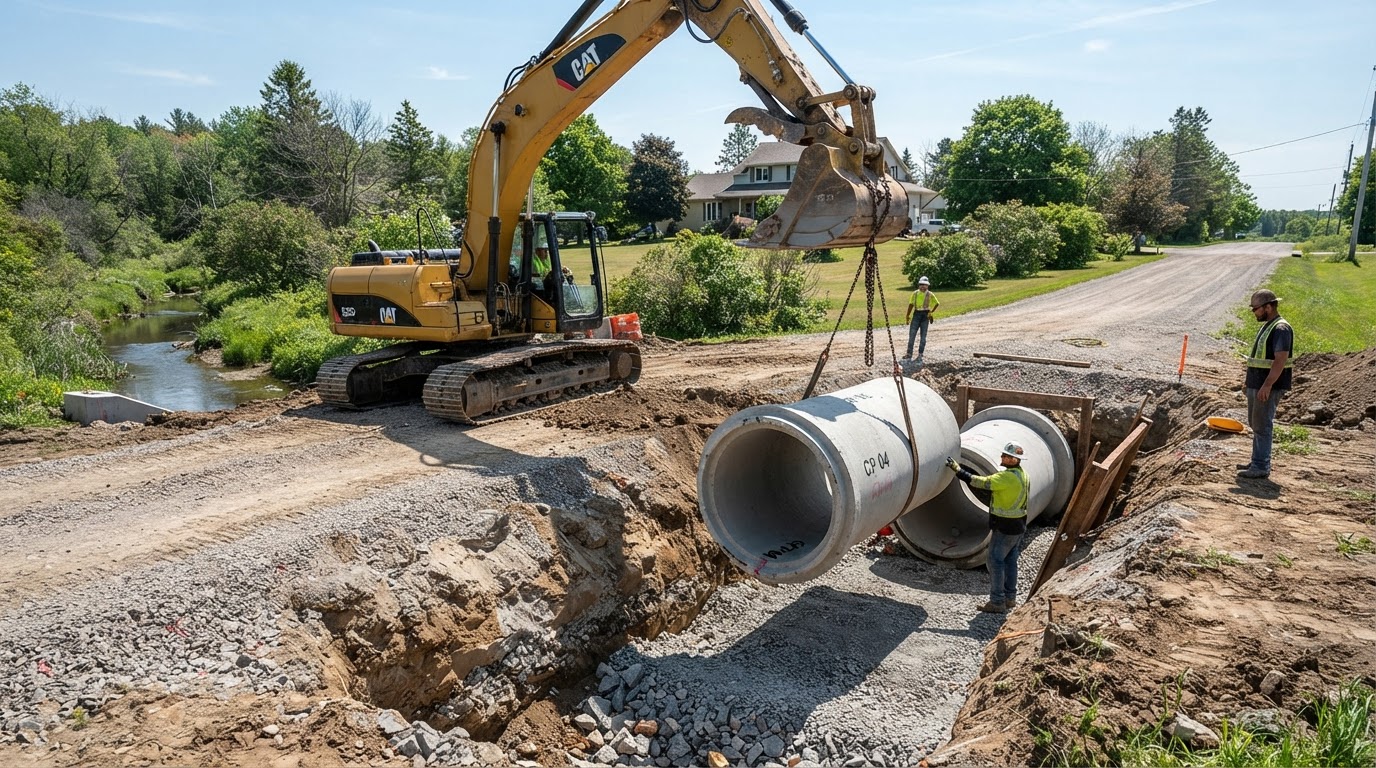
Culvert Installation & Replacement
Culvert Installation & Replacement Myrtle Beach
A culvert conveys water beneath a driveway or access crossing so drainage can pass under the route rather than pooling at the entrance or washing over the surface. Installing or replacing a culvert requires site-specific planning — the drainage direction, the crossing location, the pipe material and size, and the road authority that may govern the access. Whether you need a new crossing for a driveway or a replacement for a damaged or undersized pipe, the scope is defined by your property’s drainage conditions and the approvals that apply to the road. Share your project details and we will discuss the culvert work that fits your site.
Culvert Installation Services in Myrtle Beach
Culvert projects serve different access and drainage needs. Understanding the crossing and the drainage helps define the pipe, the installation, and the coordination required.
Driveway Access Culverts
A driveway culvert is installed where the driveway crosses a roadside ditch, drainage channel, or natural water flow. The pipe allows water to pass beneath the crossing so the driveway entrance drains properly and the roadside drainage is not blocked. The installation involves excavating the crossing, placing the pipe at the appropriate elevation and alignment, backfilling, and restoring the driveway surface. If the driveway connects to a public road, the road authority may have access or encroachment requirements.
Culvert Replacement near Myrtle Beach
Replacement may be needed when an existing culvert is damaged, deteriorated, crushed, obstructed, or undersized for the drainage it carries. The replacement process involves removing the old pipe, excavating the crossing, installing a new pipe, and restoring the driveway surface and drainage alignment. The existing pipe condition, the drainage flow, and the crossing dimensions all influence the replacement scope. If the existing culvert has been causing drainage problems, the replacement may also address the conditions that contributed to the failure.
Drainage Crossings for Rural Access
Culverts associated with private access routes on rural or undeveloped property may be needed where the route crosses existing drainage. The crossing location, the drainage flow, and the pipe sizing all depend on the site's conditions. For private roads, the requirements may differ from public-road crossings, but drainage impacts on adjacent properties and waterways still need to be considered. Not every private or public ditch can be modified without approval — the applicable requirements should be identified before the work proceeds.
Planning Culvert Installation near Myrtle Beach
A productive culvert discussion starts with understanding the drainage, the crossing, and the road authority. These are the planning considerations that help define the scope.
Drainage Alignment and Crossing Conditions
The existing drainage direction, the crossing location, the channel conditions, the pipe material, the approved sizing and design, the elevations, and the upstream and downstream considerations all define the installation scope. The pipe must be aligned with the drainage flow and set at an elevation that allows water to pass through without backing up. If the project involves an approved design, the specified pipe size and material govern. We do not invent universal pipe diameters, slopes, or hydraulic-design standards — the appropriate sizing is determined by the site's drainage conditions and any applicable requirements.
Road Jurisdiction and Encroachment Review
Driveway crossings may involve SCDOT, county road authorities, municipal authorities, private-road owners, or other applicable entities. The road's jurisdiction determines which authority's requirements apply. Before stating which permits are needed, the controlling road authority should be identified for the specific road. An SCDOT permit is not automatically required for every driveway — it applies to state-maintained roads. For county, municipal, or private roads, the requirements may differ. We coordinate around those requirements but do not independently determine jurisdiction or approve permits on an authority's behalf.
Culvert Replacement Considerations in Myrtle Beach
The factors that influence a culvert project differ by site. Understanding these variables helps you provide useful information when requesting an estimate.
Access, Existing Pipes and Water Conveyance
- Existing pipe condition — whether the current culvert is damaged or obstructed
- Drainage flow — the water volume and direction the crossing must convey
- Crossing dimensions — the width and depth of the driveway crossing
- Equipment access — entry conditions for excavation equipment
- Existing pavement — surface material that must be removed and restored
- Approved design — any specified pipe size, material, or alignment
- Material handling — excavated material and pipe installation logistics
- Restoration scope — driveway surface and drainage channel restoration
- Maintenance access — whether the crossing can be serviced in the future
We do not guarantee that culvert installation eliminates flooding or resolves all drainage complaints. The drainage conditions, the pipe sizing, and the crossing design all affect performance. Each project is evaluated based on its actual conditions and requirements.
Culvert Installation FAQs near Myrtle Beach
Discuss Culvert Installation in Myrtle Beach
Share your property location, the crossing location, the existing drainage conditions, and the road type. The more complete the picture, the more productive the discussion about pipe sizing, drainage alignment, access requirements, and next steps.
Related Services
Additional resource pages — including Access Road Construction, Ditch Digging & Maintenance, Catch Basin & Storm Drain Installation, and the SCDOT Driveway Encroachment Guide — will be linked here once those pages are published.