
Grading & Land Leveling
Grading & Land Leveling Myrtle Beach
Grading shapes existing ground to support the intended property use — whether that means preparing a homesite, creating construction access, directing surface drainage, or achieving the elevations an approved plan specifies. Not every property should become perfectly level; most benefit from intentional slopes that move water where it needs to go. The right grading approach depends on your property’s existing topography, soil conditions, drainage, and what the land will be used for next. Share your project details and we will discuss the grading scope that fits your site.
Grading & Land Leveling Services in Myrtle Beach
Grading serves different purposes depending on the property and the project. From residential yards to commercial construction sites, the scope is shaped by what the ground needs to support and how water should move across it.
Residential Property Grading
Residential grading shapes yards, homesites, and access areas to create usable surfaces and appropriate drainage. This can involve correcting slopes that direct water toward a foundation, shaping a yard for landscaping, or preparing a homesite for construction. The existing grade, soil type, and the desired finish all influence the approach. Surface preparation should leave the ground with intentional slope transitions rather than a flat surface that traps water.
Construction Site Grading near Myrtle Beach
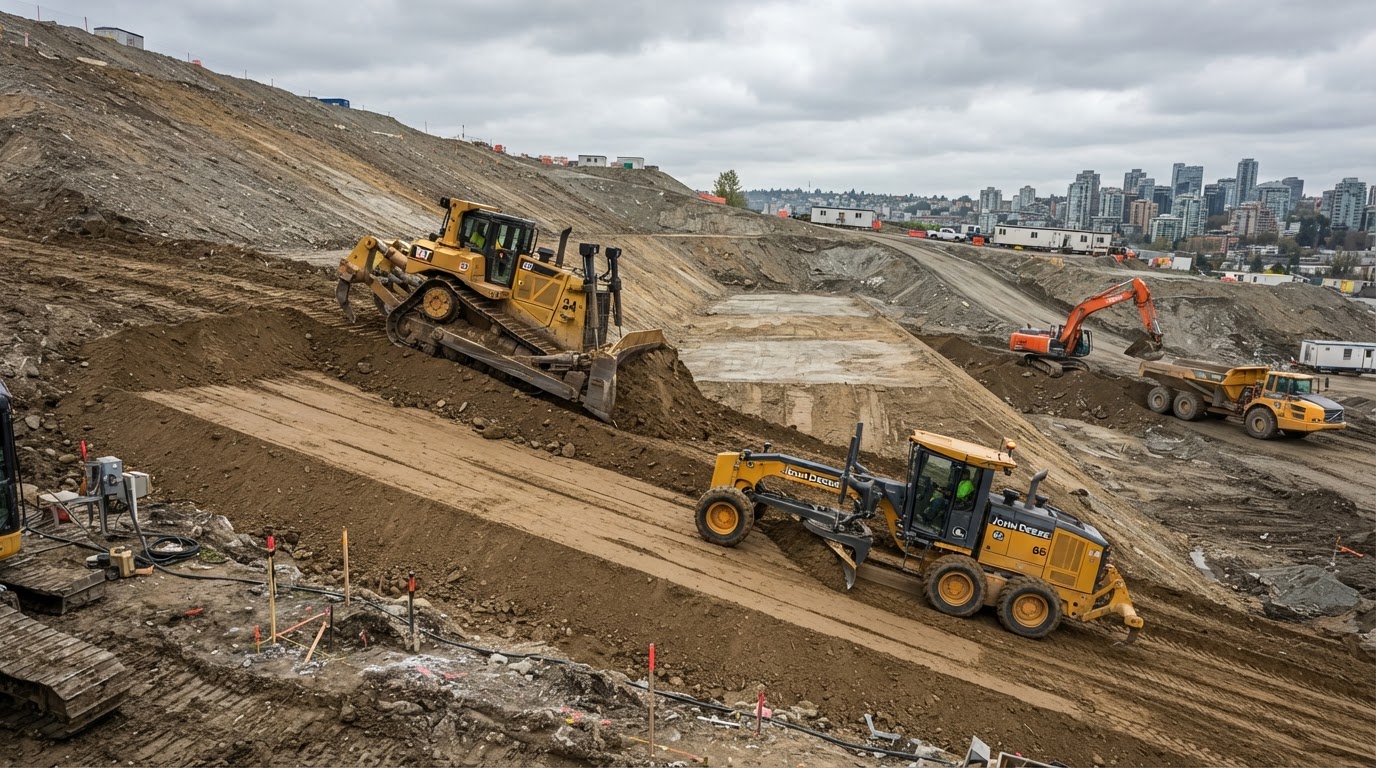
Grading for proposed structures and working areas involves shaping the ground to the elevations specified by approved earthwork plans. This can include preparing building pads, creating access routes, and coordinating with drainage infrastructure. The approved plans define the grades the finished work must achieve, and the existing topography determines how much cut or fill is needed. Construction site grading may also need to coordinate with utility installation and erosion control requirements.
Drainage-Related Regrading
Regrading can address surface water problems by reshaping the ground so water flows away from structures or toward an intended outlet. This is distinct from installing a dedicated drainage system — a French drain, catch basin, or stormwater facility. Some drainage problems are best addressed by grading alone, others by a drainage installation, and many by a combination. Understanding the cause of the water problem helps determine whether regrading is the right approach.
Planning a Land Grading Project near Myrtle Beach
A productive grading discussion starts with understanding the existing ground and the proposed outcome. These are the planning considerations that help define the scope.
Existing and Proposed Ground Elevations
The difference between the existing grade and the proposed grade determines whether the project involves cut (removing material), fill (adding material), or a combination. Property boundaries, existing slopes, and available topographic information help define the work. If the project involves approved construction plans, those documents specify the elevations the finished grading must achieve. Understanding the existing topography also helps identify drainage patterns, access constraints, and areas where the grade change may be substantial.
Cut, Fill and Soil Movement
Grading projects often involve a balance between cut and fill — removing material from high areas and placing it in low areas. When onsite material is not suitable or not sufficient, fill may need to be imported. The suitability of the material for the intended use, the hauling distance, and the equipment access all affect the scope. If the approved plans specify material types or compaction requirements, those specifications govern what material can be used and how it must be placed.
Land Grading Conditions in Myrtle Beach
The factors that influence a grading project differ by site. Understanding these variables helps you provide useful information when requesting an estimate.
Terrain, Soil and Water Movement
- Existing grade — current slopes and elevations across the work area
- Work area — size and shape of the area to be graded
- Material quantities — volume of cut or fill needed
- Site access — entry width, overhead clearance, and bearing conditions
- Existing structures — buildings, utilities, and landscaping to protect
- Soil conditions — sandy, clay, mixed, or rocky material
- Drainage outlets — where surface water should flow
- Neighboring-property impacts — runoff and grade transitions at boundaries
- Required finish — the surface condition the grading must achieve
Grading should not direct runoff onto neighboring property or create drainage problems that the approved plans were designed to avoid. Each project is evaluated based on its actual conditions — we do not publish standard price ranges.
Grading & Land Leveling FAQs near Myrtle Beach
Discuss Grading & Land Leveling in Myrtle Beach
Share your property location, the existing slopes, the intended use of the graded area, and any available topographic or grading plans. The more complete the picture, the more productive the discussion about scope, cut and fill, drainage, and next steps.
Related Services
Additional resource pages — including Drainage Solutions and Swales & Regrading — will be linked here once those pages are published.