
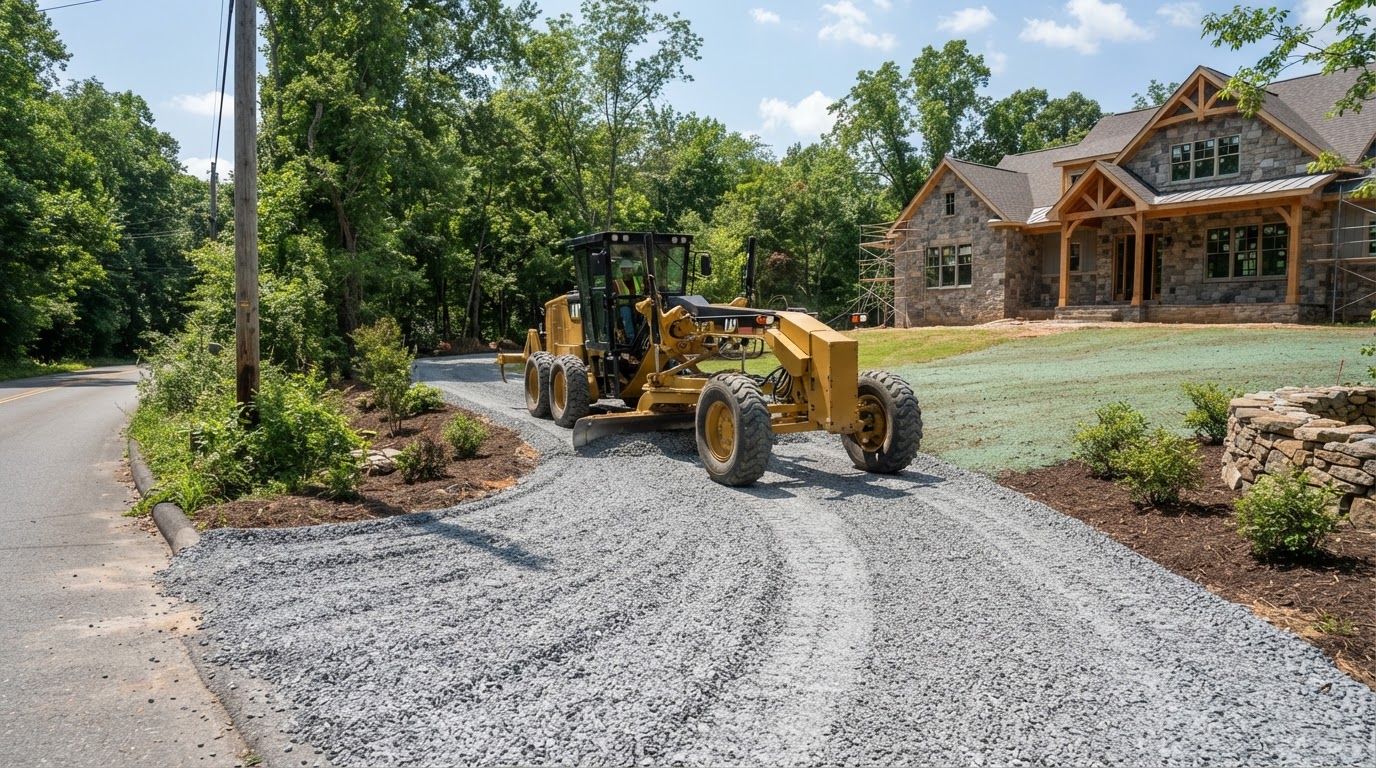
Gravel Driveway Installation
Gravel Driveway Installation Myrtle Beach
A gravel driveway creates practical, durable access for residential, rural, and undeveloped properties. But a driveway that lasts requires more than spreading gravel — it needs proper ground preparation, suitable base material, the right aggregate, and drainage that keeps water from breaking down the surface. Whether you are installing access to a new homesite or creating a longer route through undeveloped land, the scope is defined by your property’s terrain, soil, and the traffic the driveway will carry. Share your project details and we will discuss the driveway installation that fits your site.
Gravel Driveway Installation in Myrtle Beach
Gravel driveways serve different property types and access needs. Understanding the intended use helps define the layout, the materials, and the drainage the driveway requires.
Residential Gravel Driveways
A residential gravel driveway provides access from the road to a homesite with a surface that is practical, maintainable, and cost-effective. The driveway footprint, the intended vehicle use, and the existing ground conditions all influence the installation. Surface preparation creates a stable base, grading establishes the slope for drainage, and the gravel surface provides the driving area. The material type and depth depend on the traffic the driveway will carry and the soil conditions beneath it.
Rural and Vacant Property Access near Myrtle Beach
Longer access routes on rural or undeveloped parcels may involve more extensive clearing, grading, and drainage crossings. The route may cross existing drainage paths that require culverts or other crossings. Equipment access for the installation depends on the terrain and the existing vegetation. The driveway material, base preparation, and drainage design all need to account for the longer route and the conditions along it. The site's topography determines how the driveway should be graded to drain properly.
Driveway Material and Surface Options
The material type, the intended traffic, and the underlying conditions all influence the proposed construction approach. A coarser base material may provide stability, while a finer surface material creates a smoother driving surface. The appropriate material depends on the soil conditions, the vehicle loads, and the desired surface finish. Not every material is suitable for every site — the right choice depends on the property's conditions and the driveway's intended use.
Planning a Gravel Driveway near Myrtle Beach
A productive driveway discussion starts with understanding the route, the ground, and the drainage. These are the planning considerations that help define the scope.
Driveway Alignment and Ground Preparation
The proposed route, grade transitions, existing vegetation, access width, approved construction limits, and ground conditions all define the preparation scope. Clearing the route, grading the subgrade to the appropriate slope, and addressing drainage crossings are all part of the installation. The existing terrain determines how the driveway should be graded — a route across sloped ground may require different preparation than one across flat terrain. If the driveway connects to a public road, the access point may need to meet the controlling road authority's requirements.
Base Materials and Surface Drainage
Base preparation, aggregate suitability, grading, and water movement all influence how the driveway performs over time. A properly prepared base supports the gravel surface, and grading creates the crown or slope that sheds water. Without adequate drainage, water pools on the surface, softens the base, and accelerates deterioration. The material depth and type depend on the soil conditions, the intended traffic, and the desired surface finish. We do not prescribe universal aggregate depths or engineering specifications — the appropriate approach depends on the site's conditions.
Gravel Driveway Project Considerations in Myrtle Beach
The factors that influence a gravel driveway project differ by site. Understanding these variables helps you provide useful information when requesting an estimate.
Length, Materials and Drainage Requirements
- Driveway length and width — the dimensions of the access route
- Existing terrain — slopes, elevation changes, and ground conditions
- Material quantity — volume of base and surface material needed
- Intended vehicle loads — passenger vehicles versus heavy equipment
- Site access — entry conditions for installation equipment
- Surface drainage — how the driveway sheds water
- Culvert needs — drainage crossings along the route
- Maintenance expectations — ongoing upkeep the driveway may require
If the driveway connects to a public road, the controlling road authority and any applicable access approval should be confirmed before installation. Not every driveway access falls under the same jurisdiction. Each project is evaluated based on its actual conditions and requirements.
Gravel Driveway Installation FAQs near Myrtle Beach
Plan Your Gravel Driveway in Myrtle Beach
Share your property location, the proposed driveway route, the intended vehicle use, and the existing terrain conditions. The more complete the picture, the more productive the discussion about layout, materials, drainage, and next steps.
Related Services
Additional resource pages — including Access Road Construction and the SCDOT Driveway Permit Guide — will be linked here once those pages are published.