Site Preparation & Building Pads
Site Prep & Building Pad Construction Myrtle Beach
Preparing an approved construction footprint takes more than moving dirt. It requires coordinated clearing, grading, material handling, and building pad work shaped by the proposed construction plans, existing ground conditions, drainage, and the elevations the finished site must achieve. Whether the project is a residential homesite or a commercial building footprint, the scope is defined by your property’s conditions and the approved documents that govern the work. Share your plans and project details and we will discuss the site preparation that fits your site.
Site Prep & Building Pad Construction in Myrtle Beach
Site preparation bridges the gap between raw land and a construction-ready work area. The work involved depends on what the property will become — a homesite, a commercial building, or a developed parcel awaiting its next phase. Understanding the distinctions helps define the scope and the coordination required.
Residential Homesite Preparation
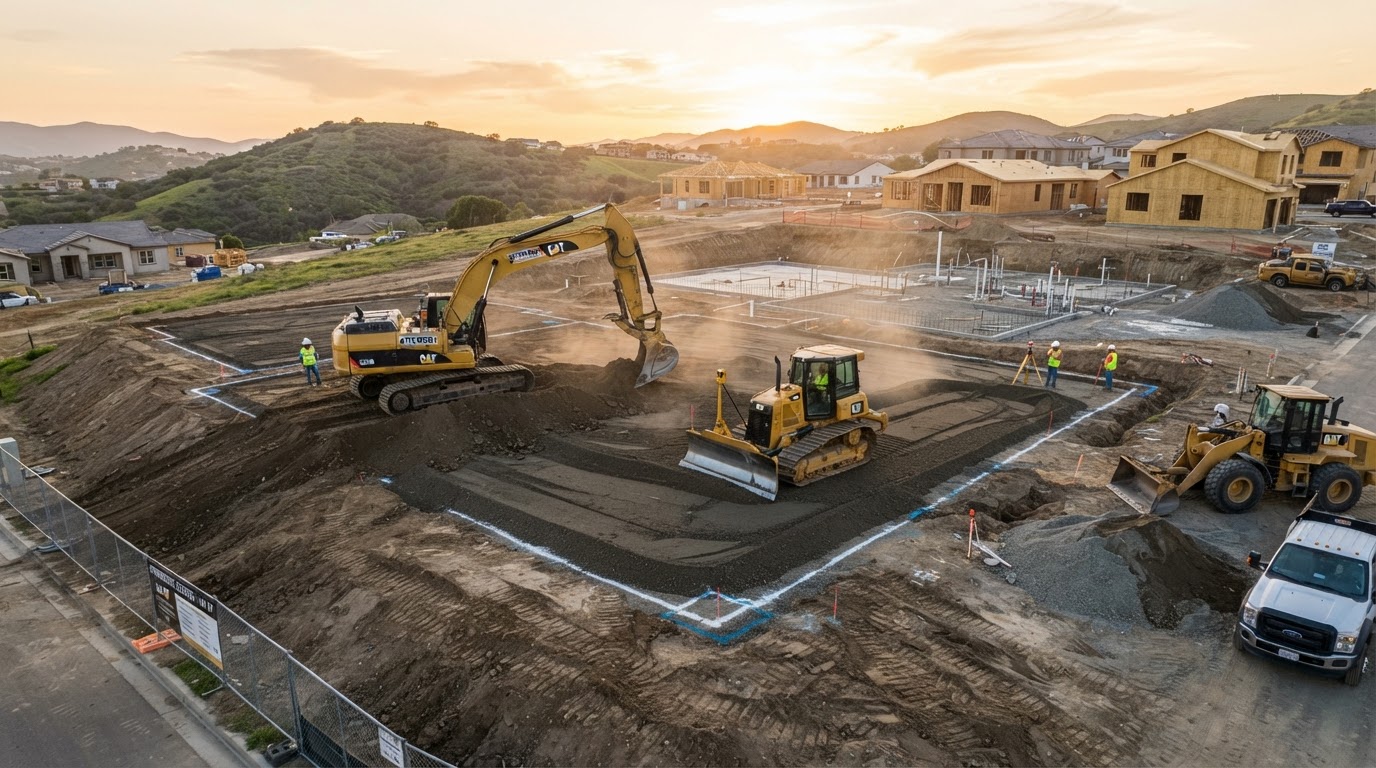
Preparing a residential construction footprint involves removing vegetation from the building area, creating construction access, shaping the proposed pad, and coordinating with foundation requirements. The existing grade, soil conditions, and the approved plans determine how much earthwork is needed. Drainage must be shaped so surface water moves away from the proposed structure, and equipment access must be sufficient for the machinery the work requires.
Commercial Building Pad Preparation near Myrtle Beach
Commercial building pads often involve larger footprints, greater fill volumes, and more complex site logistics. The work may need to coordinate with approved site plans, utility infrastructure, neighboring properties, and a construction schedule. Planned elevations, access routes, and material movement all factor into the scope. Share the available construction documents so the pad preparation can be discussed against the actual project requirements.
Preparing Undeveloped Property for Construction
Moving from raw land to a planned construction work area is a sequence: clearing vegetation, grubbing roots and unsuitable organic material, grading the existing ground, placing fill where required, and finishing the pad to the specified elevation. Each step depends on the one before it, and the approved plans define what the finished site must look like. Skipping steps or combining them inappropriately can leave the site unprepared for the construction it is meant to support.
Planning Building Pad Construction near Myrtle Beach
A productive building pad discussion starts with understanding the approved plans and the property’s existing conditions. These are the planning considerations that help define the scope — not a description of a guaranteed proprietary process.
Reviewing Approved Site and Grading Plans
The approved site plan or grading plan defines the proposed building location, the finished floor elevation versus the pad elevation, the clearing limits, the approved site grades, and the fill specifications. It may also identify required professional reviews — engineering, surveying, or geotechnical involvement. If the plans specify compaction requirements, material types, or inspection milestones, those requirements shape how the pad preparation is sequenced and what coordination is needed. We work to the approved documents rather than independently establishing the design.
Coordinating Clearing, Excavation and Fill
Project sequencing can involve clearing vegetation from the construction footprint, grubbing unsuitable material, excavating to the required subgrade, placing and spreading approved fill, and grading the finished pad. Each step depends on equipment access, material availability, and the approved plans. If the site requires inspection or testing between phases — for example, compaction verification before placing the next fill lift — that coordination is part of the project schedule. We do not supply professional engineering or compaction certification; those services come from the appropriate licensed professionals.
Building Pad Preparation Considerations in Myrtle Beach
The variables that influence building pad preparation differ by site and project. Understanding these factors helps you provide useful information when requesting an estimate.
Ground Conditions, Fill and Drainage
- Existing elevations — the difference between current grade and required pad elevation
- Soil suitability — whether existing material can remain or must be removed and replaced
- Groundwater — high water table or seasonal saturation that affects earthwork
- Required fill quantities — volume needed to reach the specified pad elevation
- Compaction specifications — requirements defined by the approved plans or geotechnical report
- Drainage implications — how the pad and surrounding grades direct surface water
- Equipment access — entry width, overhead clearance, and bearing conditions
- Hauling — trucking fill in or unsuitable material out
- Project size — footprint area and overall scope of the pad work
Raising a pad to a specified elevation does not guarantee flood protection or satisfy building-code requirements on its own. The approved plans, flood regulations, and building-code compliance govern what the finished work must achieve. We do not publish standard price ranges — each project is evaluated based on its actual conditions and requirements.
Building Pad Construction FAQs near Myrtle Beach
Discuss Building Pad Preparation in Myrtle Beach
Share your property location, the approved site or grading plans, the proposed building footprint, and the required pad elevation. The more complete the information, the more productive the discussion about scope, access, fill requirements, and next steps.
Related Services
Additional resource pages — including Building Pads Above Base Flood Elevation — will be linked here once those pages are published.