
Drainage & Stormwater
Flood Mitigation Grading Myrtle Beach
Grading can form part of a property-specific flood mitigation strategy — raising low areas, redirecting surface runoff, and improving drainage routes to reduce certain flood-related risks. But grading is not a universal flood solution. It does not remove a property from a mapped flood zone, eliminate all flood risk, or satisfy every floodplain requirement without professional design and regulatory review. We help Myrtle Beach property owners and project decision-makers plan grading work that supports an approved flood mitigation approach. Share your property details and we will discuss the scope that applies to your site.
Flood Mitigation Grading in Myrtle Beach
Flood mitigation grading is earthwork planned to address documented flood-related risks on a specific property. It is one component of a broader strategy that may also include drainage infrastructure, fill placement, and professional design under approved plans.
Surface Runoff and Property Elevation Improvements
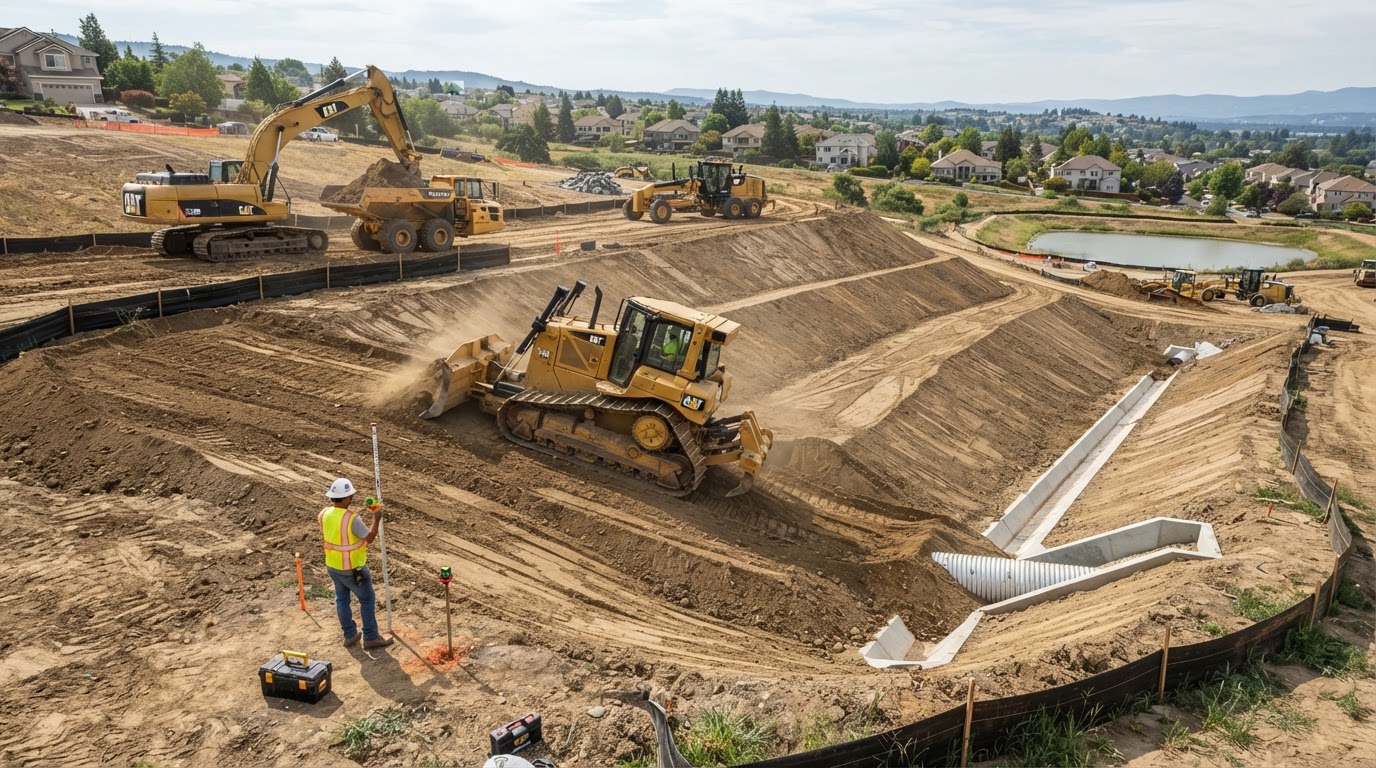
Approved changes to ground slopes, low areas, and runoff movement can redirect surface water away from problem zones and toward suitable discharge routes. This may involve filling depressions, adjusting grade transitions, or creating drainage paths that follow an approved plan. The work is property-specific and does not guarantee elimination of all flooding under all conditions.
Residential Property Grading near Myrtle Beach
Localized grading around existing buildings, access routes, and yard areas may address runoff that pools near a foundation or saturates low sections of the property. The scope depends on the existing elevations, the available drainage outlet, and whether the property is subject to floodplain regulations that govern fill placement and grade changes.
Flood-Related Site Preparation
Grading may be coordinated with approved elevation planning, drainage infrastructure installation, and future property development. Fill placement, building-pad elevations, and drainage connections may all be part of a flood-related site preparation strategy. The work follows the approved design, which accounts for flood hazards, drainage impacts, and regulatory requirements. Grading is not presented as a universal flood solution.
Planning Flood-Related Grading near Myrtle Beach
Planning flood mitigation grading involves reviewing existing conditions, available flood information, and the approved plans that govern the work. The grading follows the design rather than independent decisions about elevations or fill.
Reviewing Existing Grades and Flood Information
The planning process considers available elevation data, existing drainage conditions, mapped flood hazards where relevant, and the site-specific design criteria that apply. Proposed grading plans establish the target elevations, slope transitions, and drainage routes. Appropriate professional review may be required, particularly when the property is in a regulated floodplain. The approved design controls the actual grading work.
Coordinating Fill, Drainage and Site Requirements
Fill placement, building-pad elevations, drainage impacts, and regulatory review can all be connected in a flood mitigation project. It is important to distinguish between base flood elevation — the regulatory flood level established by mapping and the authority having jurisdiction — finished floor elevation — the proposed elevation of the building’s lowest floor — and building pad elevation — the prepared surface beneath the structure. Each serves a different purpose in the approved design, and the grading work must follow the plans that establish them.
Flood Mitigation Grading Considerations in Myrtle Beach
Flood mitigation grading involves site-specific constraints that influence what can be accomplished and what the project scope includes.
Factors That Influence Grading Scope
- Existing elevations — current grades and low areas
- Surface runoff — direction and volume of water movement
- Groundwater — seasonal water table and saturation conditions
- Rainfall and tidal influences — coastal drainage and outlet conditions
- Available drainage outlets — discharge routes and elevation
- Soil conditions — suitability for fill and grading
- Adjacent properties — drainage impacts and runoff considerations
- Fill restrictions — floodplain regulations and placement rules
- Wetlands and coastal considerations — environmental review where applicable
- Applicable floodplain review — permits and regulatory approval
Grading does not remove a property’s mapped floodplain designation, raising soil does not eliminate all flood risk, not all fill placement is allowed, and no universal elevation offset satisfies every local rule. Each project follows the approved design and the regulatory requirements that apply to the specific property.
Flood Mitigation Grading FAQs near Myrtle Beach
Discuss Flood-Related Grading in Myrtle Beach
Share the property location, existing drainage conditions, any known flood hazards or floodplain designation, and the approved plans if available. The more complete the information, the more productive the discussion about grading scope, drainage coordination, and next steps.
Related Services
Additional specialized pages — including Building Pads Above Base Flood Elevation and Post-Hurricane Site Cleanup — will be linked here once those pages are published.