
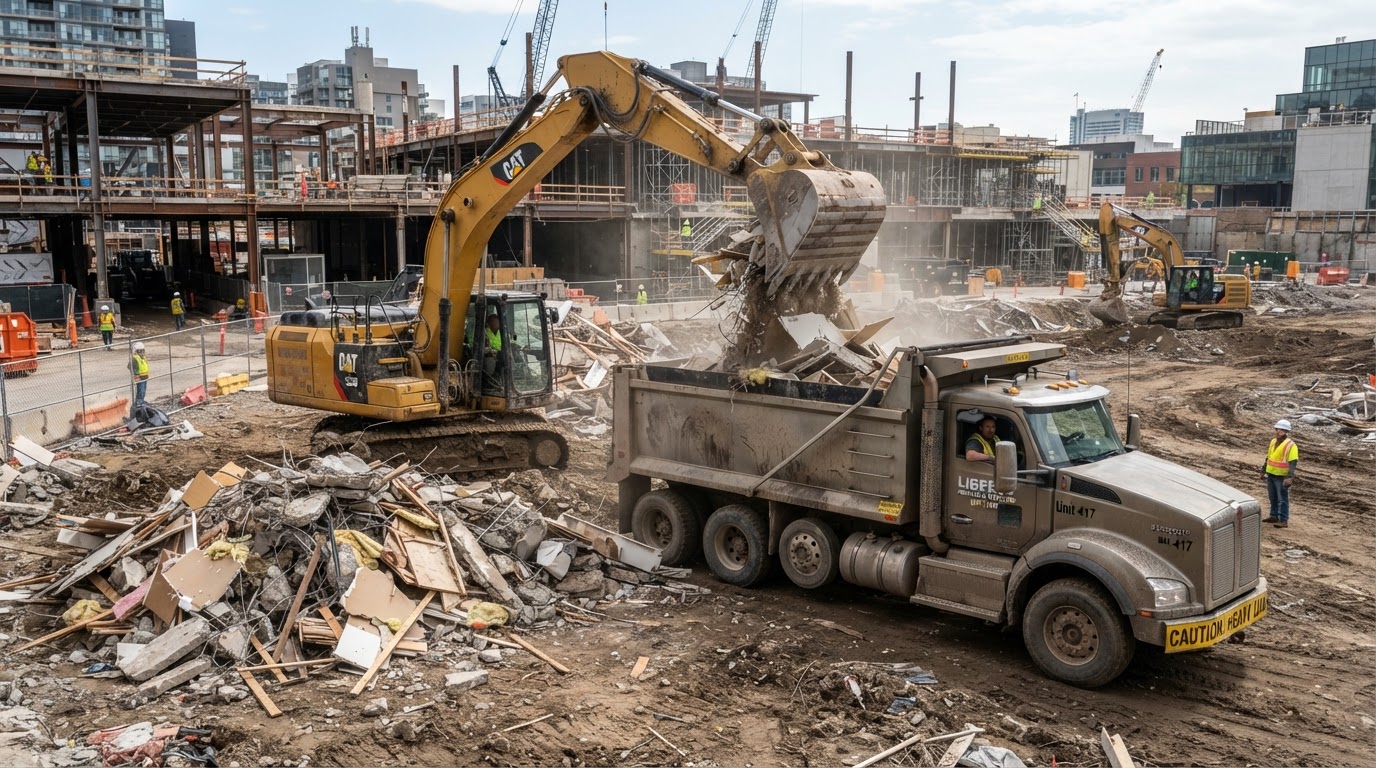
Debris Removal & Hauling
Debris Removal & Hauling Myrtle Beach
Debris removal and hauling clears construction and demolition material from Myrtle Beach work sites — loading broken concrete, lumber, metal, vegetation, and other project debris and transporting it for disposal or recycling. The work depends on material type, volume, loading conditions, equipment access, and disposal arrangements. Construction-related hauling is distinct from household junk removal — share your project details and we will discuss the hauling scope that fits your site.
Construction & Demolition Debris Removal in Myrtle Beach
Debris hauling covers several project situations, each with its own considerations for material type, volume, and disposal.
Demolition Material Hauling
Concrete, lumber, roofing, building materials, metal, and other demolition debris are loaded and hauled offsite within confirmed scope. The material type, volume, and loading conditions determine the equipment and disposal arrangements. Each project’s debris is evaluated based on its actual characteristics and the site’s access.
Site Clearing Debris Removal near Myrtle Beach
Woody debris, roots, brush, and other vegetation material from land-clearing and earthwork projects are loaded and hauled offsite. The volume and type of clearing material influence the hauling approach. Some material may be suitable for chipping, mulching, or other management depending on the project and site conditions.
Construction Site Cleanup & Material Removal
Loading, hauling, and site cleanup remove construction-related material from active work sites. Equipment access, material separation, and appropriate disposal or recycling arrangements are planned as part of the scope. We do not advertise unrestricted acceptance of all materials — each project is evaluated based on its actual debris and conditions.
Planning Debris Removal & Hauling near Myrtle Beach
Debris hauling planning involves the material, the site, the loading conditions, and the disposal arrangements. These are the considerations that help define the scope.
Material Type, Quantities, and Loading Conditions
Material type and approximate quantities determine the equipment, container or truck requirements, and disposal or recycling arrangements. Loading conditions — including site access, ground stability, and material location — influence how debris is loaded and staged. Material separation may be needed where disposal or recycling facilities require it. Hazardous or regulated materials are excluded from standard hauling scope.
Equipment Access and Disposal Coordination
Equipment access determines what trucks or loading machinery can reach the debris and how material is loaded for transport. Disposal or recycling arrangements depend on the material type and the available facilities. Site conditions, haul distance, and the project schedule all factor into the hauling plan. We do not claim ownership of a fleet of dump trucks, containers, or specialized equipment without verification.
Debris Hauling Considerations in Myrtle Beach
The variables that influence debris removal differ by material and site. Understanding these factors helps you provide useful information when requesting an estimate.
Factors That Influence Debris Hauling
- Loading difficulty — how accessible and manageable the material is
- Debris volume — cubic yards or approximate quantity
- Material weight — concrete and dirt are significantly heavier than wood
- Material characteristics — mixed, separated, or contaminated material
- Disposal requirements — facility type and acceptance criteria
- Truck access — entry width, overhead clearance, bearing surface
- Haul distance — distance to the disposal or recycling facility
- Site cleanup expectations — final condition after debris removal
We do not invent weight limits, material acceptance guarantees, or fixed per-load rates. Each project is evaluated based on its actual conditions.
Debris Removal & Hauling FAQs near Myrtle Beach
Discuss Debris Removal & Hauling in Myrtle Beach
Share the property location, the type and approximate volume of debris, loading conditions, equipment access, and whether the material is separated or mixed. The more complete the picture, the more productive the discussion about hauling scope, disposal, and next steps.